Learning from Deer Exclosures: A Walk in Plummer’s Hollow

Walk in Penn’s Woods, a statewide coordinated event on the first Sunday in October, encourages people across Pennsylvania to learn how their local woods work, see forests in new ways, and appreciate and love the forests so that we can all care well for them.

PA Forestry Association

Again this year we’re leading a hike for Walk in Penn’s Woods, this time with a focus on living with Pennsylvania’s most popular game animal, white-tailed deer.
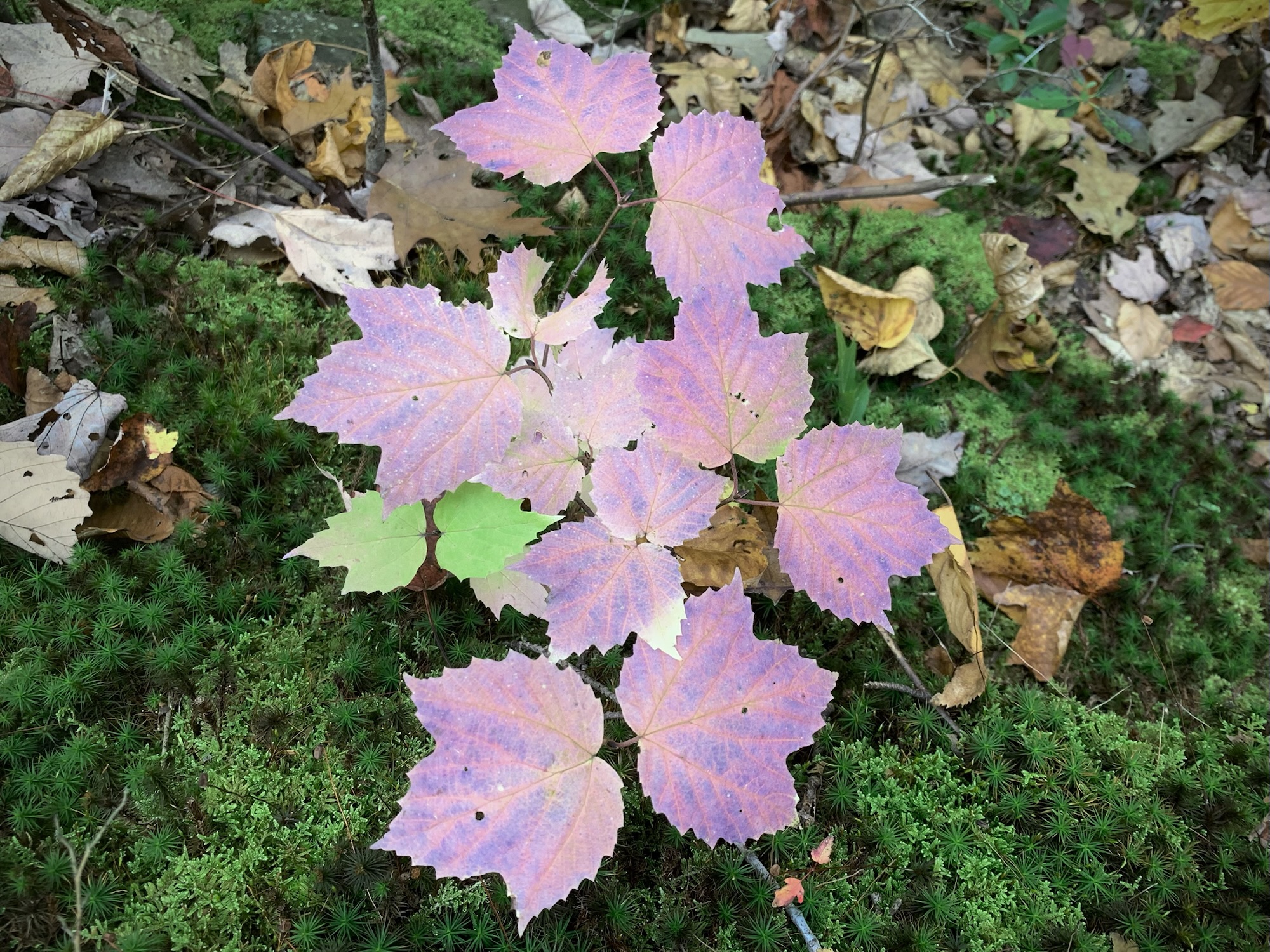
maple-leaf viburnum is a good indicator of low deer browse levels

DAY: Sunday October 4, 2026

TIME: 9am to 1pm

WALK ADDRESS and/or GPS COORDINATES OF WHERE THE WALK WILL START: Entrance to Plummer’s Hollow: 40°39’54.9″N 78°13’47.2″W

BRIEF DESCRIPTION (terrain level and estimated mileage):

Terrain: Moderate | Estimated mileage: 2 miles

This walk should be of particular interest to other landowners and land managers, but anyone who enjoys exploring the natural world should come away with a better understanding of how deer browsing affects nearly everything we see in Penn’s Woods. We will examine four different deer exclosures of varying ages and sizes, and discuss other strategies for protecting native trees, shrubs and forbs from white-tailed deer, as well, including some lessons from our hunting program. And we’ll point out numerous native species that have benefited from reduced browse pressure.

On US Rt. 453 half a mile east of Tyrone, look for a narrow, one-lane bridge across the Little Juniata River—the beginning of Plummers Hollow Road. Follow it up and across the railroad tracks to our gate, which will be open, and into a small parking area where we will hopefully leave a few cars before proceeding up the hollow. The gate will be closed again at 9:15, so don’t be late! The walk will begin a mile and a half up from the entrance.

ACCESSIBILITY OF WALK: Uneven terrain and a bit of a climb will make this challenging to anyone in a wheelchair or using a stroller. That said, one of the two hike leaders, Marcia Bonta, is 86. Any reasonably fit person should be able to do this.

CONTACT FOR MORE QUESTIONS: Dave Bonta – bontasaurus@yahoo.com 814-660-9638

Spring wildflowers: back on track

trillium 1The perennial wildflowers and shrubs are doing fine despite the prolonged cold snap in April. On April 18th I counted hepaticas and found 149 blossoms on 60 plants at five different locations on the road bank – the only place they seem to occur in the hollow. By the 24th, the shadbush was in full bloom, though it’s not a great year for them, and purple trillium started blooming.

On the 25th, sweet white violets were blooming on Ten Springs Trail, and along the road, even more trilliums were out. Unbelievable how quickly they grow after just a few days of warmth! Long-spurred violets were also in bloom. Sarsaparilla, Solomon’s seal, Solomon’s plume, yellow mandarin, Canada mayflower, red elderberry, etc. have all fully emerged, although none are flowering yet. Round-leaved yellow violets blossomed on the old charcoal mound at the fourth pull-off. I walked farther above the road bank to see if wildflowers were spreading uphill. Solomon’s plume was. I also found a clutch of at least 20 maple-leaved viburnums. Canada mayflowers also were spreading up the mountain.

On April 28th, descending Pit Mound Trail and then following along the stream, I noticed that Solomon’s seal and yellow mandarin were expanding up-slope. At the big tulip tree stump, a bevy of round-leaved violets bloomed and mitrewort along the stream was in bud and spreading. Many small red elderberry shrubs had sprouted and among a clump of wild oats or sessile bellwort, I found the first blossom.

The following day, down near the bottom of the hollow, I noticed that the steep slope of Laurel Ridge was carpeted in the new green of Canada mayflower leaves as far as I could see, convincing me that the ground cover here would be the same as it was on our farm in central Maine back in the 60s if the deer numbers were controlled. The same would be true in the wooded side of Sapsucker Ridge because in the first side-hollow, where the woods was spared by the recent logging, even where the hurricane took out trees, Canada mayflower leaves spread. But I found none beside Greenbrier and Ten Springs trails where the forest had been so badly logged.

Other wildflowers are also spreading despite the depressing encroachment of the invasive garlic mustard. The first yellow mandarin flowered. Many wild hydrangeas were leafing out on either side of the road. I saw more maple-leaved viburnums on the bank before the dark place where, unbelievably, some hepaticas were still blooming. Surely the expansion of so many native shrubs and wildflowers in the hollow testifies to the relative success of our 15-year-old deer hunting program.

© Marcia Bonta

2006-2007 deer season: final report

I have just received the final report from the hunters on our property for the 2006 – 2007 white-tailed deer season. They were incredibly successful.

The group removed a total of 45 deer from our property this year, 35 “antlerless” (does) and 10 “antlered” (bucks). Our hunter-friends tell us about the sizes of the racks on the ten bucks, the even bigger ones they missed, and the successes of their friends and family members. They will, if given a chance, tell stories, always true of course, about the hunt this year.

To me, the numbers are more important. Last year our friends took away 29 does and 3 bucks. In other words, this year they took 40 percent more deer than last year. In 2004, they harvested 30 does and 1 buck (that was a sad year for the hunters), while in 2003, they took 24 and 7. Their best year, before this one, was 2002 when they shot 32 does and 11 bucks.

I go even farther with the numbers. I multiply the number of deer times the vast amount of browse that each one consumes. Browse is a fancy term for the buds from the trees and shrubs that they eat—seven pounds, by one estimate, per day. Throughout the winter they thrive on browse. Buds pruned off by the deer represent leaves and twigs that won’t grow, trees and shrubs that may be stunted or killed. Our hunters have probably saved many TONS of buds, many hundreds or perhaps even thousands of trees and shrubs this winter.

The numbers are higher than ever due to several factors. On the last Saturday of the regular, two-week rifle season, December 9th, there was a very light snow cover and the weather was clear and bright. Our group, 11 families with about 16 active hunters, plus some of their friends, were all out to take advantage of the visibility. Also, they seemed to be responding to our pressure to take as many deer as possible. Skilled, motivated people did an excellent job for us.

While our friends particularly cheer one another when they get racks they can mount on their garage walls, I see the deer simply as forest consumers, as so many bud-eating mouths. Oddly, though, despite the impressive numbers, a few days after the close of the last flintlock season in mid-January, we began seeing numerous deer tracks in the new snow. More stories for our friends next year, and continuing worries about the forest for us.

–Bruce