a nature preserve at the northern end of Appalachia
Author: Dave Bonta
I live in an Appalachian hollow in the Juniata watershed of central Pennsylvania, and spend a great deal of time walking in the woods. My books of poetry include FAILED STATE: HAIBUN, ICE MOUNTAIN: AN ELEGY, BREAKDOWN: BANJO POEMS, and ODES TO TOOLS.
Join Marcia and Dave for a 4.5-mile hike in Plummer’s Hollow, sharing perspectives on forest health, climate change and biodiversity issues, for a Walk in Penns’ Woods on Sunday, October 5. This is also cross-listed as a Juniata Valley Audubon Society field trip. We’ll meet at 9:00 a.m. at the bottom of Plummer’s Hollow Road, just across the railroad tracks from Rt. 453, walk up the road to the top of the watershed, eat lunch at the scenic vista, and walk back through the oak-heath woods on the southeast side of the hollow, keeping an eye out for migratory birds and fall foliage.
What to bring: Bring a lunch, drink, and rain gear, if necessary. Wear an orange hat or vest – it’s hunting season.
For more information, text or email Dave: 814-660-9638, bontasaurus@yahoo.com
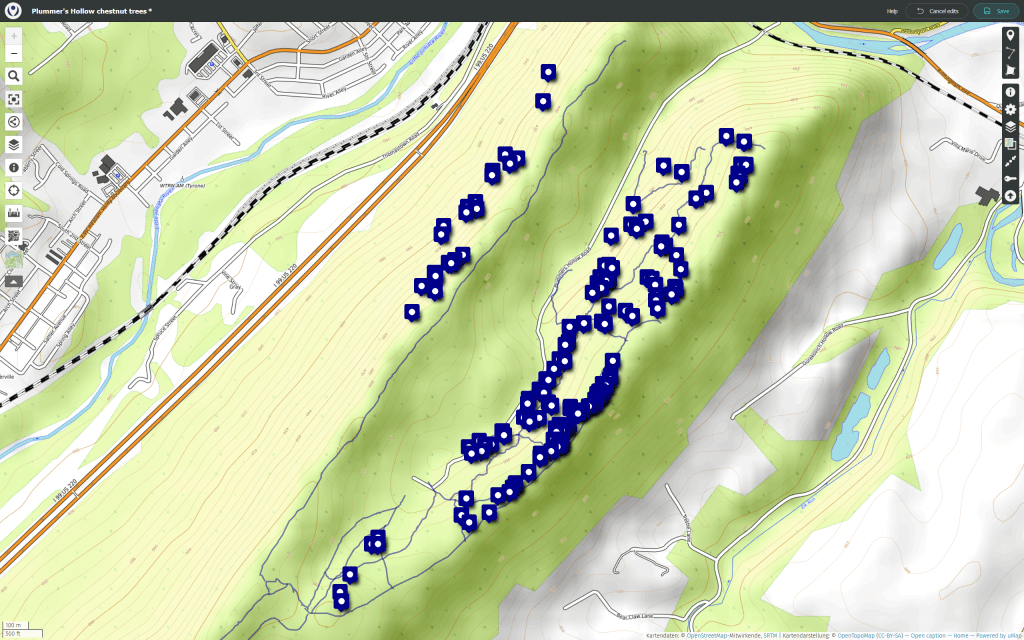
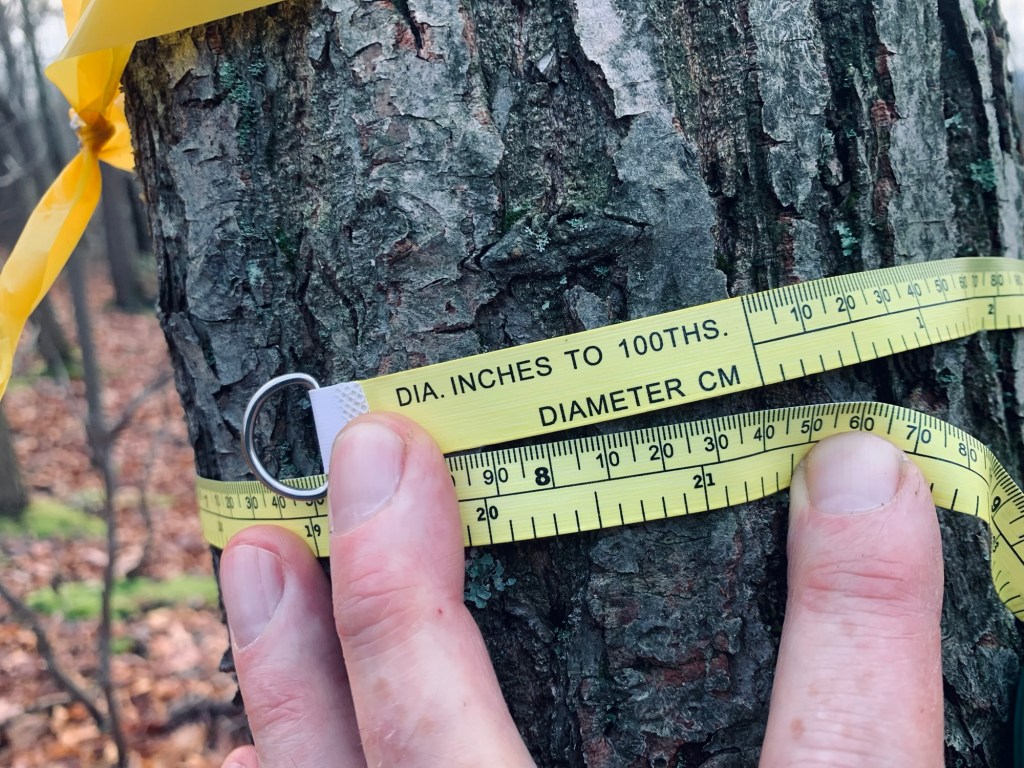
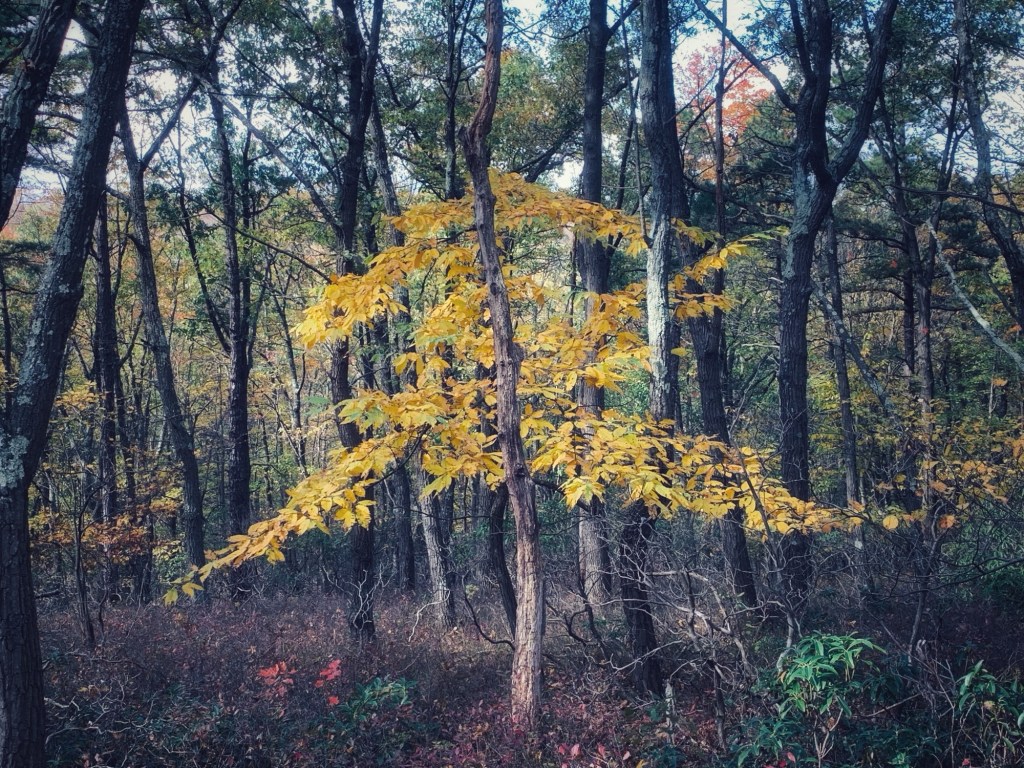
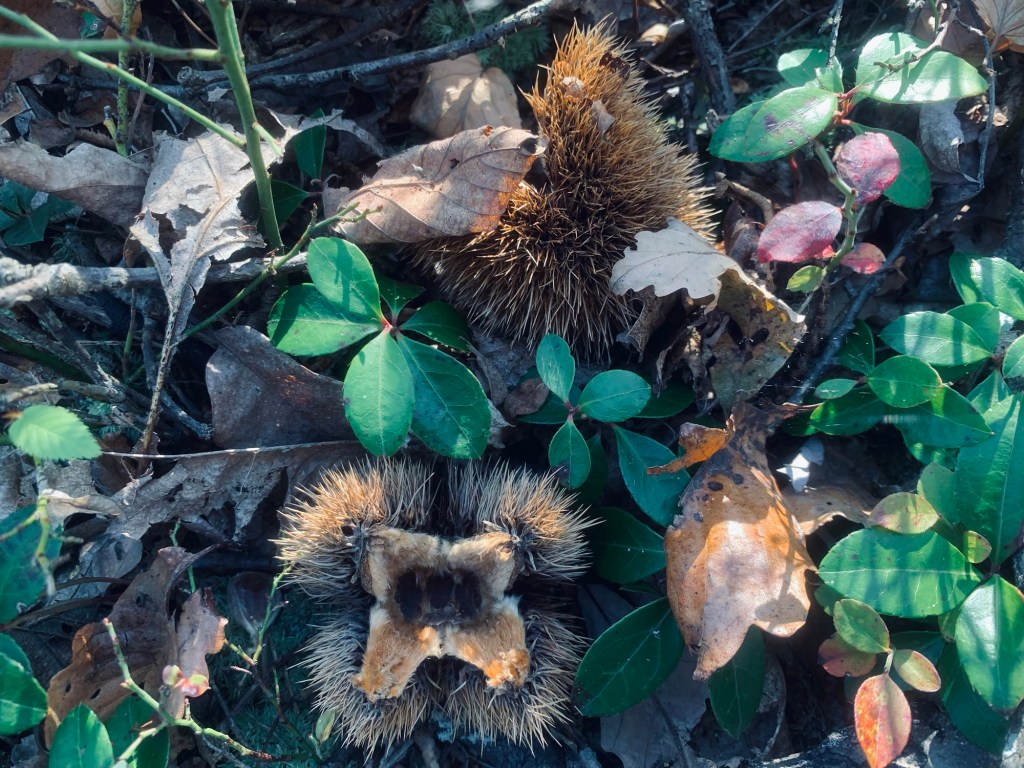
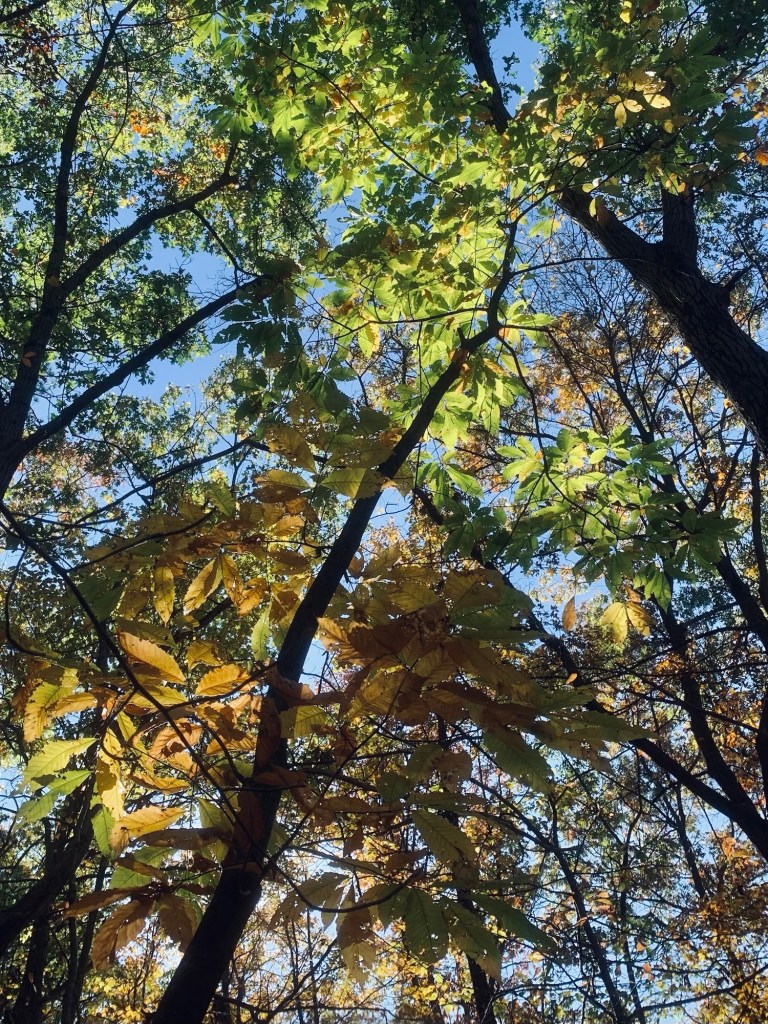
One hundred and fifty-two. That’s how many American chestnuts I was able to locate this autumn on our square mile of mountaintop land, after extensive wandering about the oak-heath forest on Laurel Ridge, their main stronghold, as well as the northwest-facing slope of Sapsucker Ridge, where a smaller scattering remains. I initially tagged each tree, sprout, or (in one or two possible cases) seedling with yellow surveyor’s ribbon, then came back after all the leaves were down to record a bit of data about each one: diameter at breast height, estimated height of tree, whether it’s on the way out, and if so, whether it has any basal sprouts poised to take over.
At present I’m using a free app on my phone, Avenza Maps, to record the data. A friend of Eric’s from the American Chestnut Foundation is interested in doing some genetic analysis, and we’ll see what comes from that. It’s possible that a few might actually be Castanea pumila — Allegheny chinquapin or dwarf chestnut, which is also affected by the blight. Many of them are quite tall, however, so I’m assuming that the vast majority are Castanea dentata, though they do also hybridize.
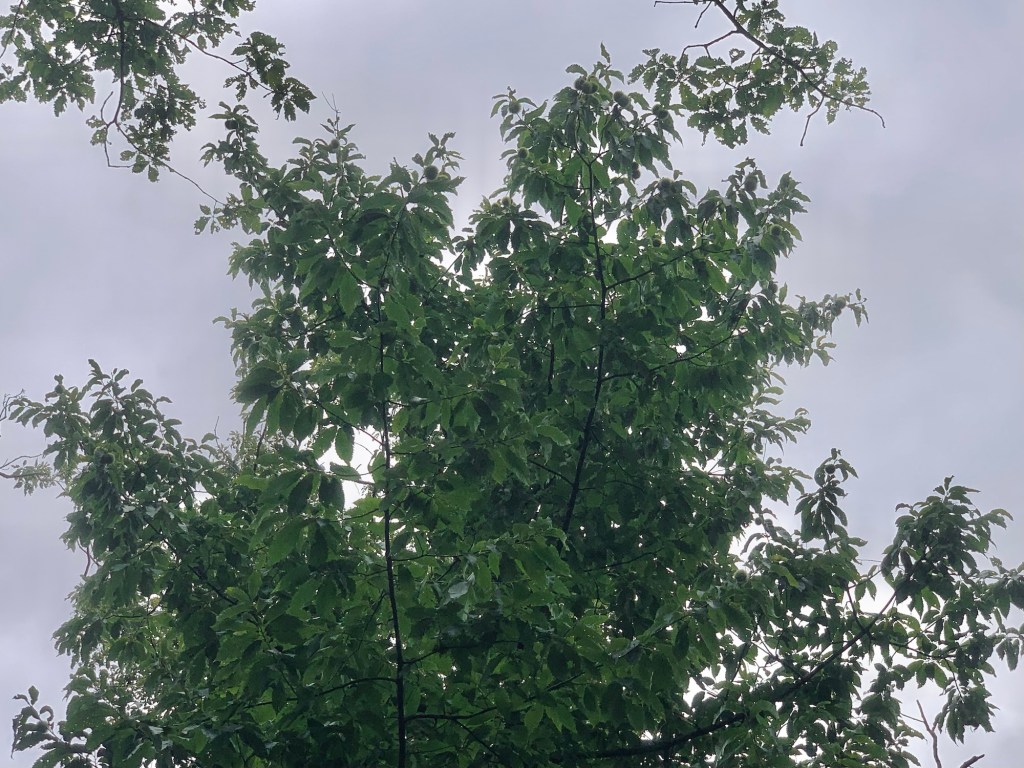
The biggest American chestnut on our end of the mountain is just over the line with a neighbor, and was the only one to bear nuts this year. It came in at 8.7 inches dbh (diameter at breast height, which is standardized at 4.5 feet) and is about 75 feet tall—canopy height where it’s growing. The largest on our own property is 8.4″ dbh and about 70 feet tall, just north of the ridge crest near the end of Laurel Ridge. In second place is one conveniently located adjacent to Laurel Ridge Trail: 7.9″ dbh, ~75 feet tall. Three more are over six inches in diameter, seven more are over five inches, 19 more are over four inches, 35 over 3 inches, and all the rest (80+) smaller than that. I took note of which ones were nearly dead with just one or two, badly deer-browsed sprouts: those will be candidates for deer fencing.
I’m sorry I didn’t start keeping records years ago, but better late than never. I just felt the need to better understand what trees (of various species) we have and how they’re doing in this time of fluctuating deer populations and new invasive species, pests and blights. It’s been heartbreaking to see the nemotode-caused beech leaf disease come into the hollow, bringing the very real possibility that all our lovely old American beeches will die, just as our white ashes have all been killed by the emerald ash borer, the butternut trees have all succumbed to butternut canker, and the wooly adelgid continues its slow decimation of the eastern hemlocks.
The spongy moth (formerly Gypsy moth), though controlled a bit by a virus and fungus now, can still do considerable damage to oaks, especially in combination with late freezes, which are a lot more common in recent years due to global weirding. This is however good news for some of the chestnuts, since canopy openings due to dead oaks may allow more Castanea trees to flower, ennabling cross-fertilization by their insect pollinators, and thereby maybe someday allowing the species to evolve resistance to the blight.
And that’s our primary management goal for chestnuts: to give them the maximum opportunity to evolve resistance—the work of centuries, most likely. So it seemed imperative to start keeping track of them, see whether their numbers are increasing, declining, or remaining about the same, and keep an eye out for possible new sprouts from the nuts these hoary old warriors are still able to produce, once in a while.
I’m not entirely sure where this project goes from here. If anyone has any thoughts or suggestions, leave a comment or otherwise get in touch. As a poet with dyscalculia, I’m not necessarily cut out for doing science, but I do love a good excuse to wander around in the woods, so I’m definitely planning more surveys of some of the rarer trees and shrubs, and possibly other landscape features such as old charcoal hearths. Mapping is not only fun, but can reveal patterns that are hard to see otherwise. The chestnut project showed what we’d always known based on casual observation, that the trees are concentrated on the ridgetops, but I was surprised at just how many grow on the lower slopes. And they clearly avoid the less acidic soil of the Juniata Formation in favor of its flanking Bald Eagle and Tuscarora formations. The relative few in the latter, on Sapsucker Ridge, either grow among the dense blueberry and huckleberry bushes flanking the open rock slopes—which provide plenty of sunlight for flowering—or on steep slopes, where deer don’t browse as much as on the ridgetop. Laurel Ridge, by contrast, has a much denser understory to protect the sprouts until they get past deer browse height (5-6 feet).
In any case, keeping the deer numbers as low as possible seems key to their long-term survival, so best of luck to all the hunters out there.
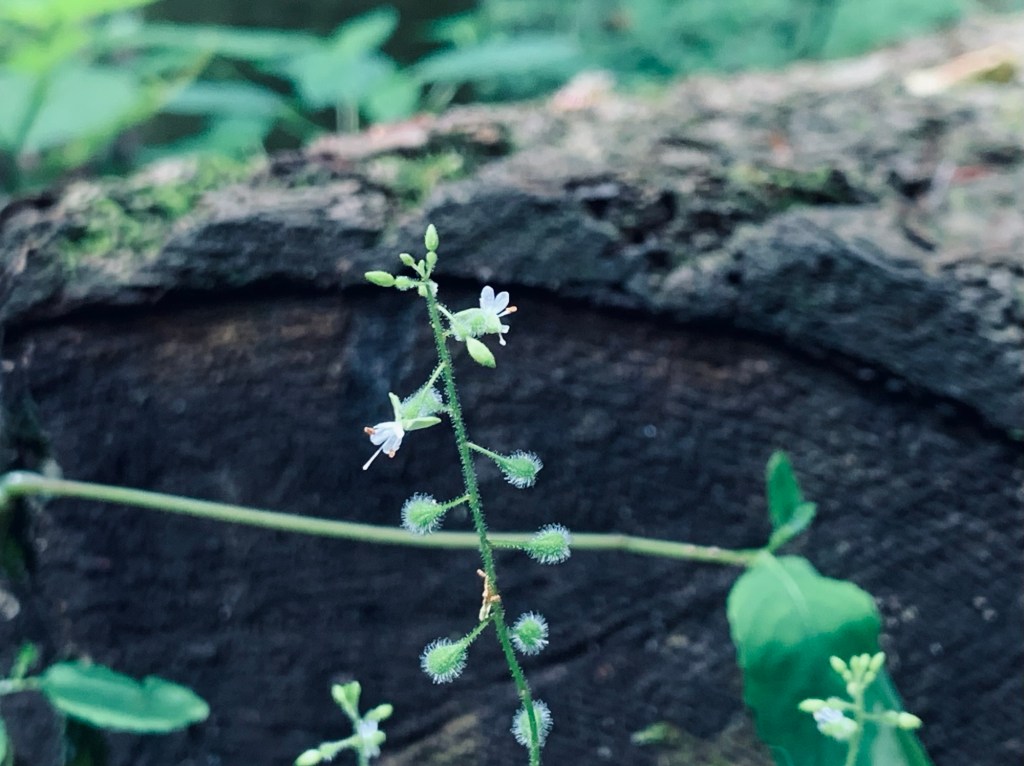
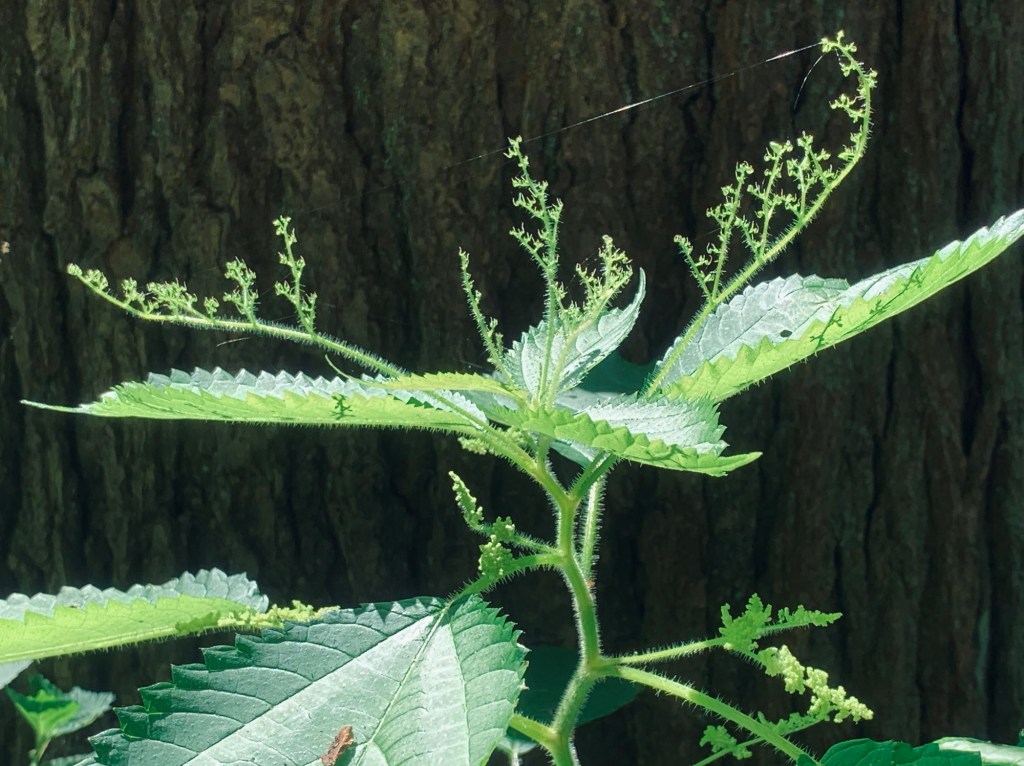
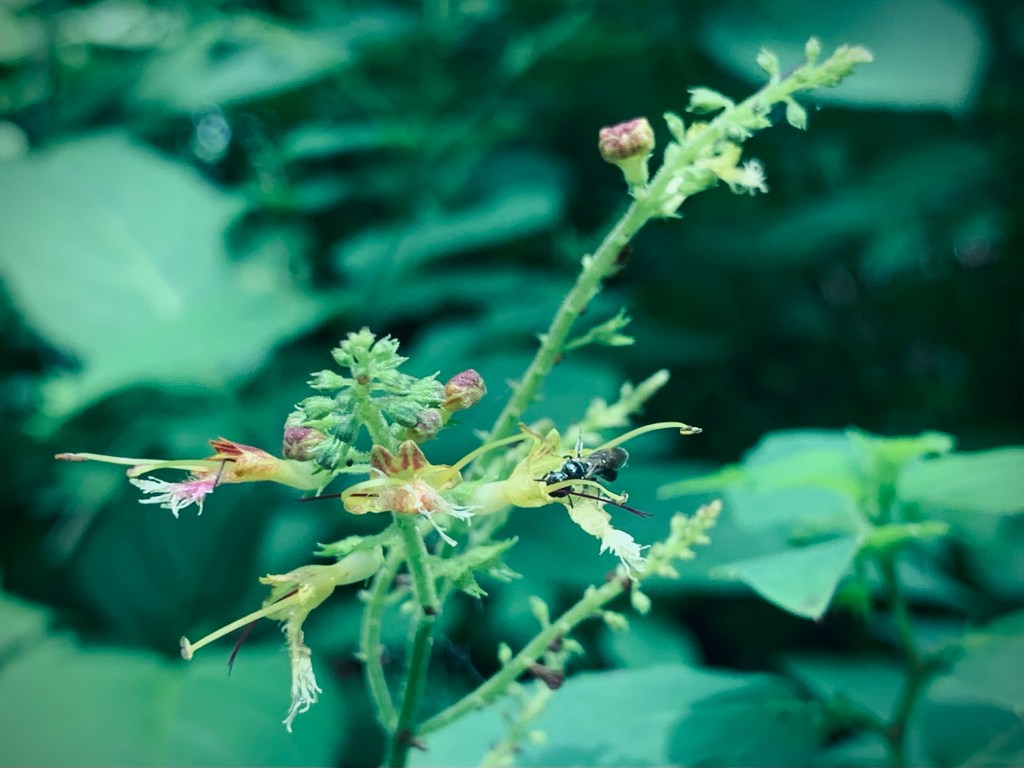
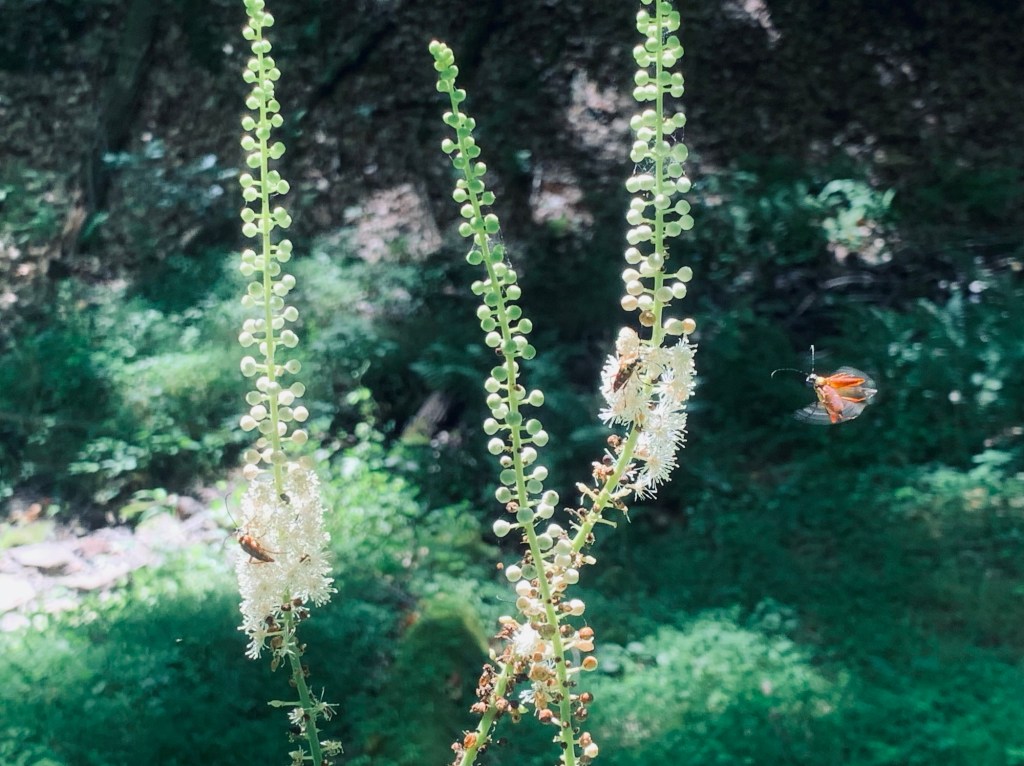
The news is grim, but in Plummer’s Hollow, the enchanter’s nightshade is still blooming, the wood nettle and horsebalm are just coming into bloom, and the black cohosh is at its height. And there are insects. Many, many insects. It’s worth remembering that 99 percent of them — by species, if not absolute numbers — have no interest in us, and are just out there living their best lives and performing no doubt essential functions in an ecosystem more complex and intricate than anyone will ever understand.
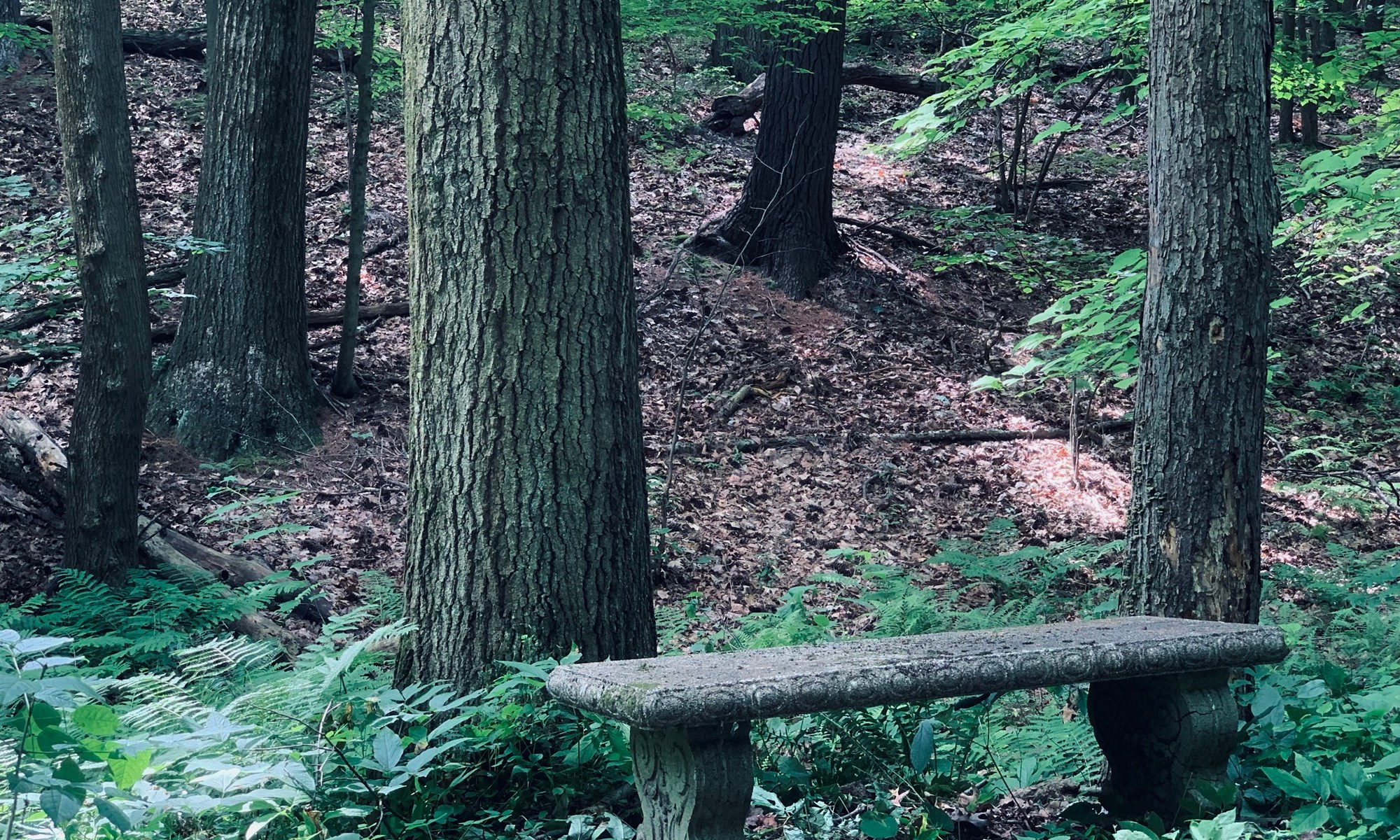
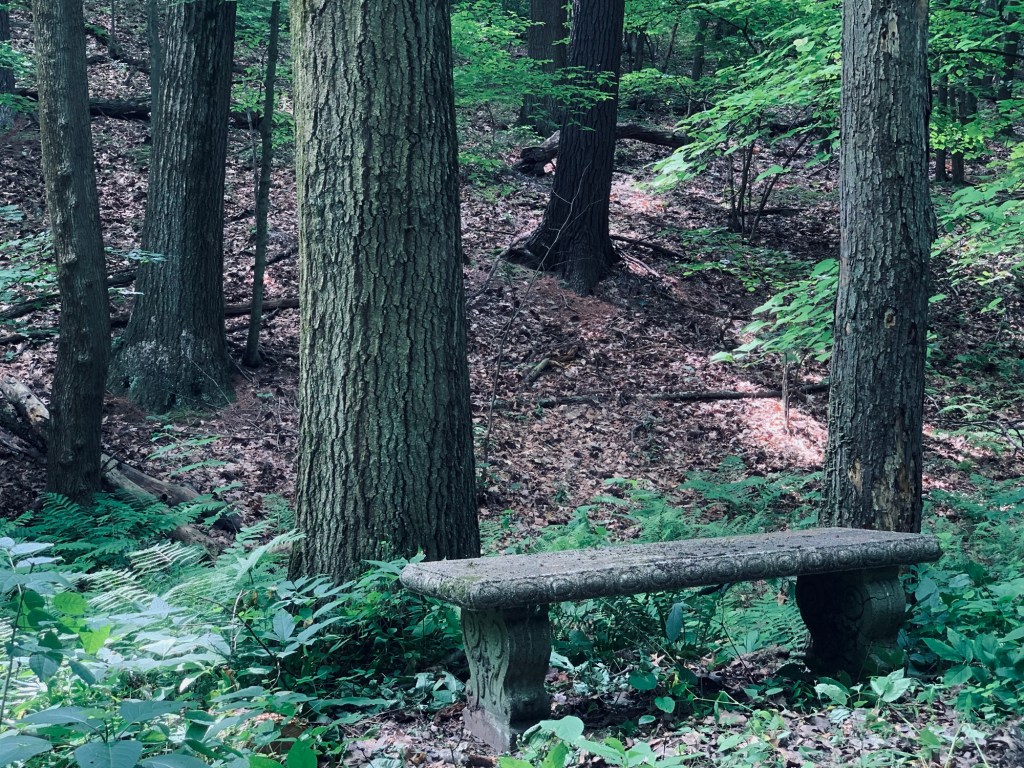
The Plummer’s Hollow road/trail now has a second bench up near the fork, where the public portion ends. Thanks to Eric Oliver for hauling it down there from up near the garage of the main house, where it had been installed in the 1950s (we think) as part of a round of improvements by then-owners Kenneth Plumb and Phyllis Plummer Plumb. We decided to move it in part because of a comment that a visitor had left in the trail registry, suggesting that it might be nice for walkers who made it the whole way to have a place to rest and enjoy the ambiance of the upper hollow.
Speaking of the trail registry, we’ve replaced the old notebook, and added a QR code to the outside of the registry stand, near the entrance signboard, for anyone who prefers to submit comments by email.
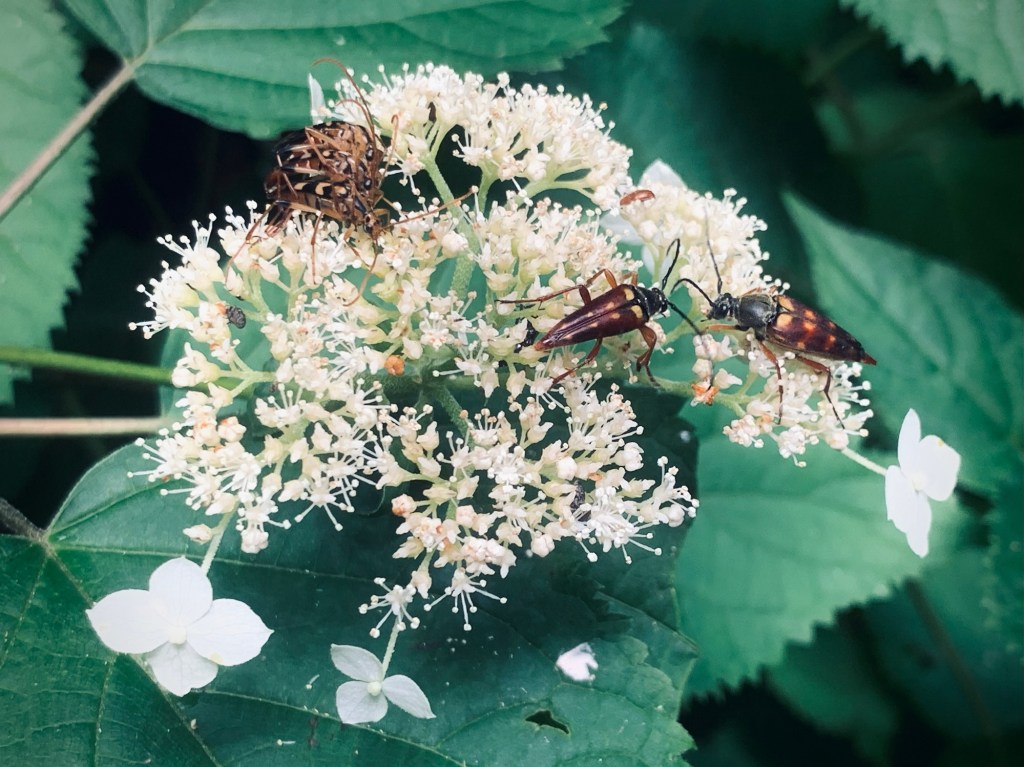
As for why anyone would WANT to walk up the hollow now, with all the bugs and humidity: it’s a longhorn beetle orgy on the wild hydrangeas! Much longhorniness. And the black cohosh are beginning to bloom…
Mark has pulled together a number of useful suggestions and considerations for birders interested in visiting Plummer’s Hollow—check it out. I’ve put a link in the main menu, right under the eBird hotspot link. It’s structured as a series of FAQs, which get increasingly technical—and interesting—as they go along. I was struck by this bit towards the end:
What’s the “migrant trap” phenomenon all about?
A narrow strip of habitat on the east slope of Sapsucker Ridge, basically an ecotone of field edge, wild grape tangle, and tall woods, stretching from the top of First Field northeastward for over a mile to Dogwood Knoll, harbors the vast majority of individuals and species on the property during the year, and particularly during peak migration periods. Birds fall out here constantly while moving both north and south, attracted to available cover as well as feeding opportunities.
One of the main reasons we think that the Sapsucker Strip is so attractive to them is the presence of many towering wild black cherries, which in other forests have been systematically harvested for their valuable wood. In Plummer’s Hollow during the Labor Day peak, a single black cherry can hold 50+ transient as well as resident species at a time (no exaggeration), including birds foraging on the ripe cherries themselves, on the gnat clouds attracted to the fruit, and on other birds.
Other aspects of the migrant trap involve its location as a possible preferred staging ground (particularly August-October)—a known, dependable stopover point with not only abundant resources but also shelter and safety. Going south, forest birds likely remember and also communicate to other birds the existence of certain major “buffet” locations like Plummers’ Hollow, where they can fatten up in preparation for the long journey, just as they might at coastal locations and wetlands.
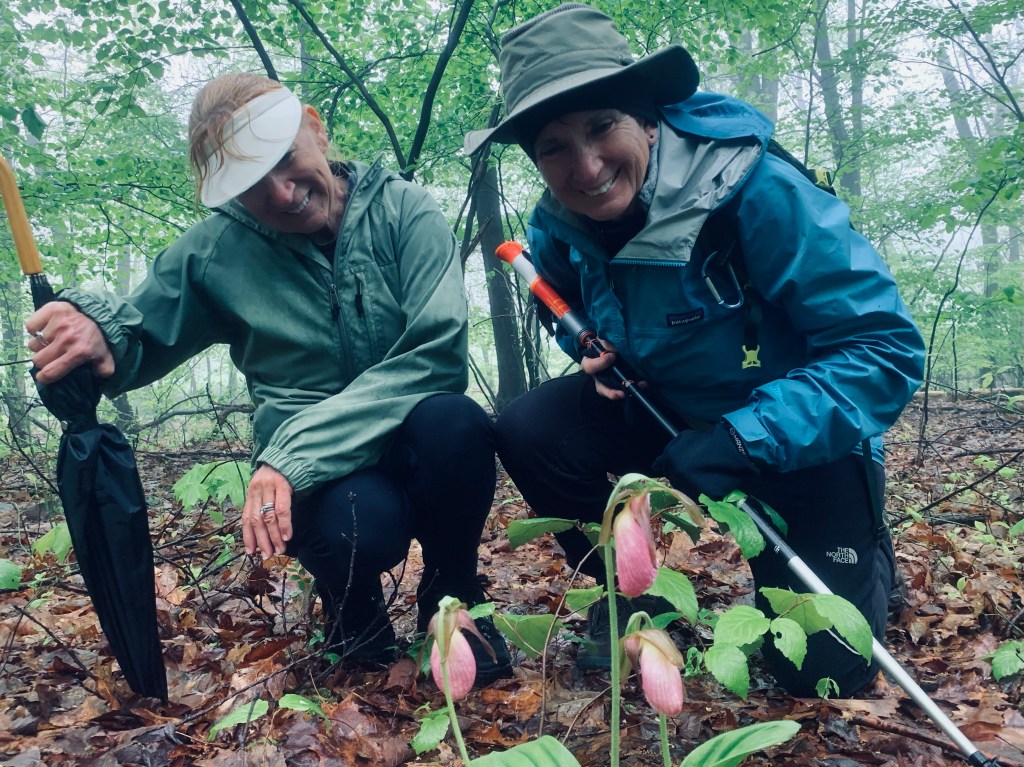
Most folks opted to stay home this morning, but two hardy hikers braved the elements and joined us to look at wildflowers in the rain.
I can’t remember another spring when the wake-robins overlapped with the lady’s-slippers!
In other news, we were pleased to be able to help the Raiders of the Lost Lark team win the Shaver’s Creek Birding Cup this year, camping in our field overnight for a head-start in their Blair County-focused effort. The Yellow-breasted Chat was still hanging around for them yesterday, and a rare-for-us Clay-colored Sparrow showed up as well. They also picked up a Kentucky Warbler on their way down the hollow. Congratulations to them.
We’ll be leading a walk for the general public this coming Sunday, May 5, starting at 8:00 a.m. Meeting at the gate, we will take a leisurely stroll up the hollow to see the wildflowers and birds that are increasing their numbers daily. Overflow parking is available between the bridge and tracks and at the parking area along 453 just downstream from the bridge. Bring your camera and binoculars. Plan on it being over around 11:00 a.m.
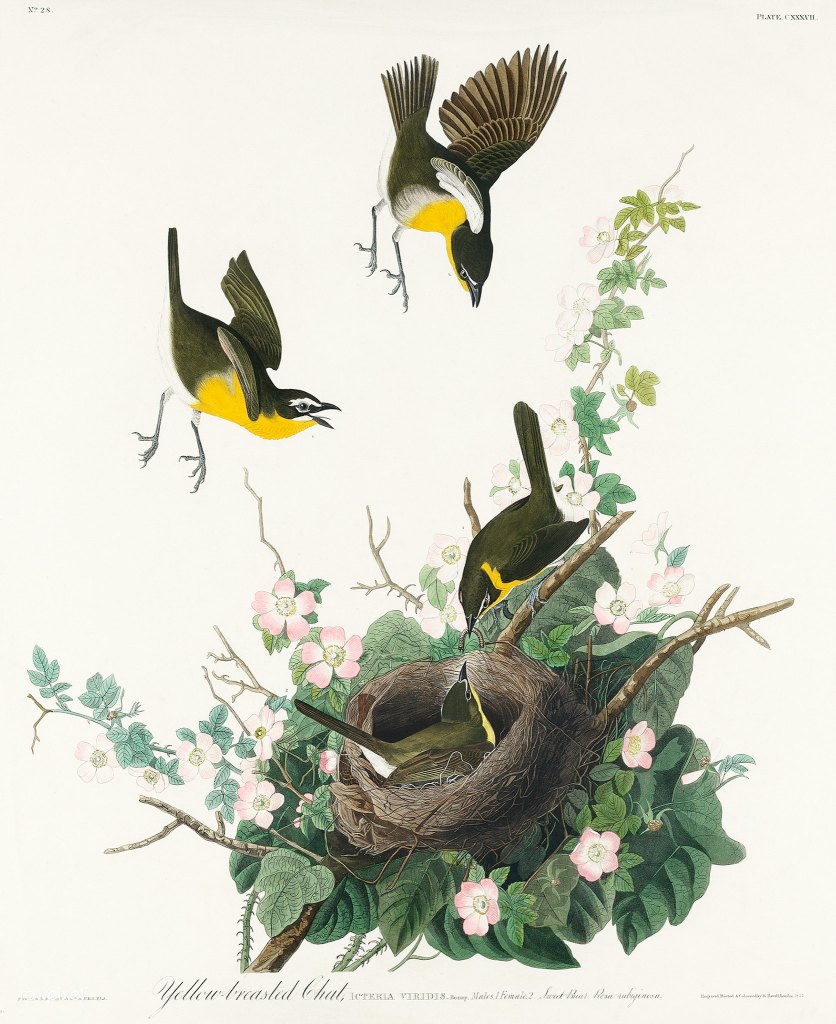
In other exciting news, Mark just recorded the first Yellow-breasted Chat on the mountain in many years, in the blackberries near the top of our old meadow. We’ve been pleased with the slow but steady recovery of blackberries over the past couple of decades of good hunting, and this gives us another reason to value them, in addition to the many quarts of berries we harvest from them and the excellent protection they give to native tree and shrub sprouts trying to survive the deer we do still have.
John James Audubon’s painting of Yellow-breasted Chats




 Plummer's Hollow, Pennsylvania