Another Christmas Bird Count on our mountain. As members of the Juniata Valley Audubon Society, we have been counting numbers and species of birds one day every December since 1979. In 2006 the date was December 16, and at dawn it was mostly clear and 36 degrees.
I was off by 8:30 a.m. for the CBC. Steve had left an hour earlier, having already counted yard birds at dawn, including a pair of eastern screech owls! As I reached the top of Butterfly Loop, an American crow flew overhead. At least four Carolina wrens caroled back and forth. Then a downy woodpecker called, followed by a distant pileated woodpecker that was also drumming. Next I pished up dark-eyed juncos and the one American tree sparrow. So far, so good.
I tracked back and forth along the edges of the powerline right-of-way, getting the expected species–ruffed grouse, hairy woodpecker, the local Canada geese flying overhead, a song sparrow, and blue jays. Then I heard a common raven. I walked along the top of Sapsucker Ridge, but I occasionally beat back down into the thickety areas and found lots of juncos, black-capped chickadees and tufted titmice but not much more.
On the sunny edge of the spruce grove, I did glimpse a winter wren twice that dove into the underbrush and saw my first red-bellied woodpecker. And on the Far Field Road, an eastern bluebird called. Still, I was anxious to reach the Far Field and find the fox sparrow I had seen the previous day. But I had no luck. Only chickadees, juncos, downies, and a song sparrow. Very disappointing. I so wanted that fox sparrow and the white-throated sparrows, but there isn’t much in the way of fruit for them except for Japanese barberries. Because the few wild grapes have been eaten, there are no American robins or cedar waxwings. So, despite the glorious, warm weather, I didn’t find any lingering migrants like eastern towhees, hermit thrushes or gray catbirds.
I sat resting near the end of the Second Thicket, which seemed devoid of birds, but I was too tired to care. What will be, will be.
Then I thought I heard a towhee beyond the Second Thicket and laboriously made my way up and over to a heavy blackberry thicket. To my delight I pished up the white-throats and fox sparrow along with a northern cardinal and Carolina wren. I sat down to see if I could get a better towhee call and sure enough I did. What a bonanza. I never knew this thicket existed high above and to the left of the Second Thicket, almost to the mountaintop, giving me a great view of Sinking Valley.
Pulled back down the slope by the elusive call of the towhee, I made it to Parks’s old road and wet area where the stream begins. I stood and pished at a cluster of barberry shrubs and more white-throats flushed. I waited a little longer and the male towhee emerged and then quickly hid himself again. At last I had a real view. And to think that there was not a bird here yesterday. Thank goodness for the siren call of the towhee. As I sat there, he continued calling “toe-hee.”
Finally, I headed back home for a very late lunch and saw only the usual juncos and towhees. I ate quickly and went out again. There, hunting low over our field was a female northern harrier. I watched it for ten minutes as it quartered back and forth and finally circled high and headed down Sapsucker Ridge.
Walking along Laurel Ridge quietly, I was suddenly startled as a wild turkey flew up a few feet away in the understory. Dave had gotten a flock of ten around lunch time, but this was a single.
I pished at the bottom of the spruce grove and juncos flushed all around me like snowflakes and like snowflakes, they were too many to count.
From Alan’s Bench I watched the setting sun light up the most distant mountain as chickadees and juncos called from the spruce grove. I kept hoping for a golden-crowned kinglet or two. Even before the sun set, I heard the continual, shivering, downscale cry of a screech owl.
At last it was time to call it a day. With 27 species on my own–three of which were unusual–I had had one of my best CBCs, even though I had missed the brown creepers and golden-crowned kinglets of the previous day.
Steve had even more surprising species than I had–a Lincoln’s sparrow, a barred owl, a belted kingfisher down by the river, and, just like last year, a golden eagle. Altogether, we found 37 species, missing both cedar waxwings and robins. Still, it brought both of us some exciting moments as it always does.
© 2007 Marcia Bonta
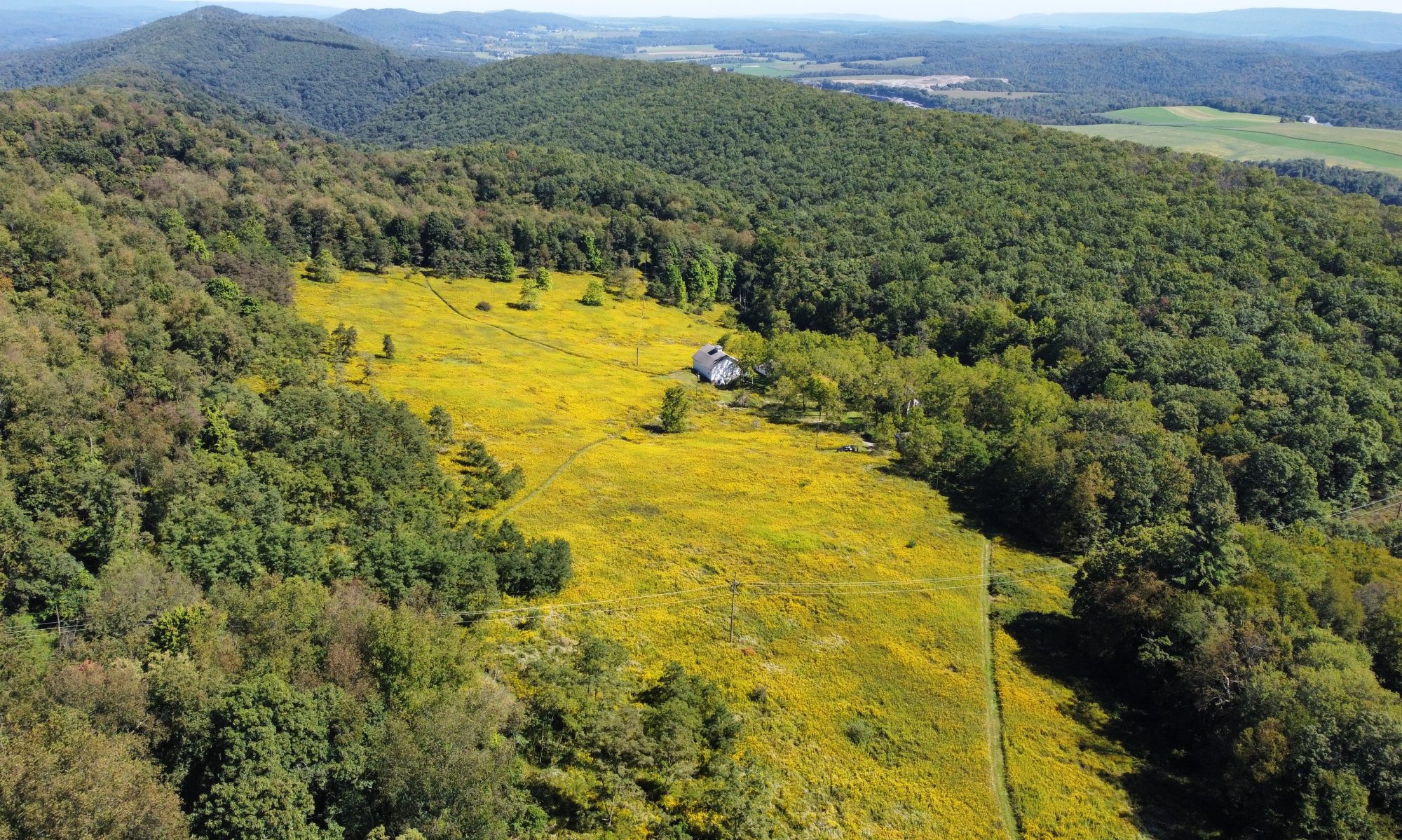
 Plummer's Hollow, Pennsylvania