Monarchs on the move

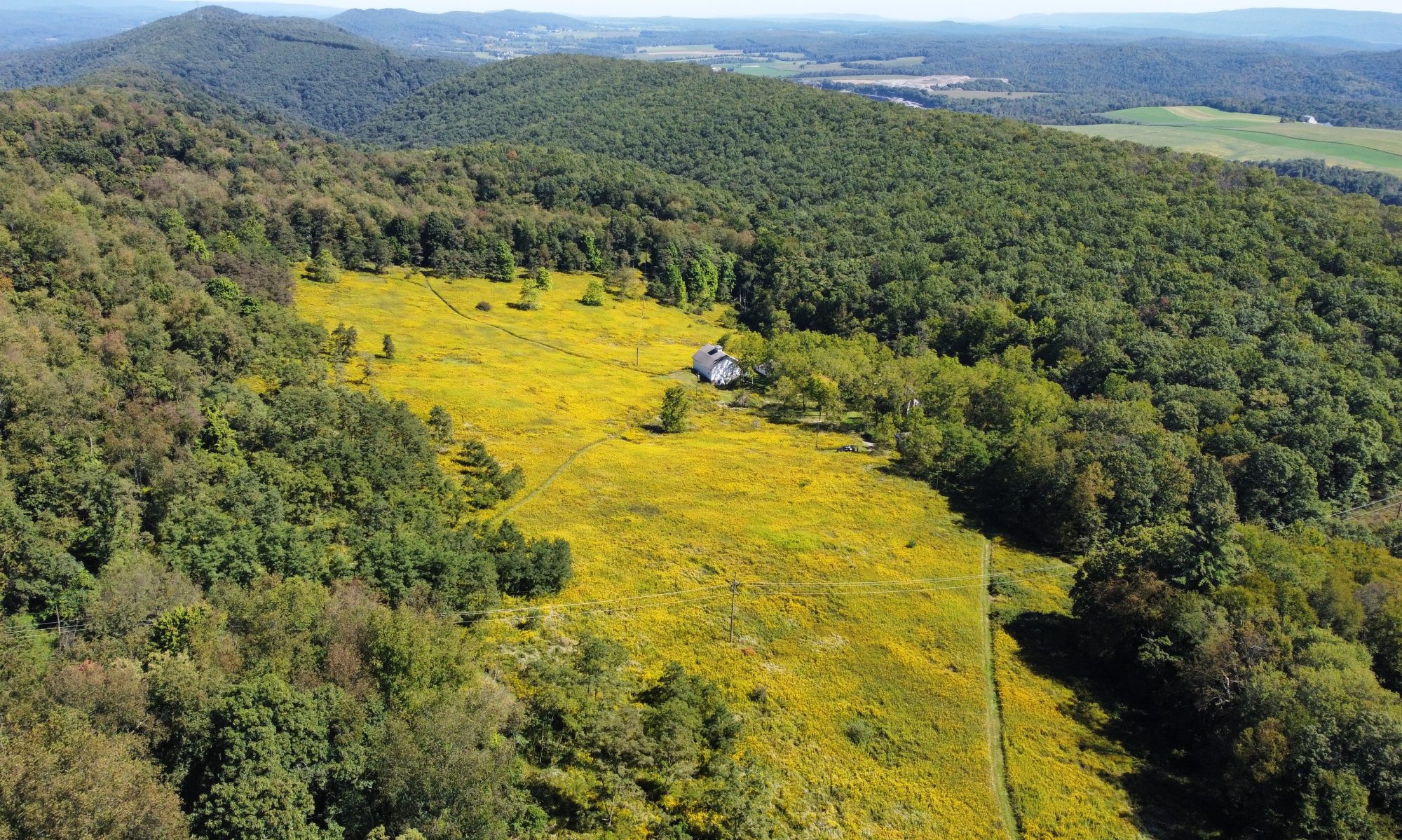
foggy monarch The monarch butterfly migration is well underway, with higher numbers than we’ve seen in many, many years. With close to fifty acres of goldenrod and asters in our First and Far Fields, we get a lot of monarchs coming in to nectar and spend the night. And with nighttime temperatures falling into the 40s and 50s (5-15 C), the monarchs tend to seek each other out in late afternoon so they can spend the night in small clumps in the trees. The next morning, the fields are aflutter with hundreds of monarchs, especially bordering Sapsucker Ridge where the sun strikes first.

Anecdotal evidence suggests a robust monarch migration throughout the east. My Uncle Hal drove up from Beckley, West Virginia the other day, and said he was dodging monarchs all the way. And a post to the Pennsylvania Birding listserve on Thursday reported a staggering 7,000 monarchs in one morning at a hawk watch in Northampton County. The poster, Michael Schall, says, “It was non-stop on the clicker trying to get a decent count with my total of nearly 7000 by the time I had to leave at 1300pm conservative at best. Most were counted between 0900 and 1030 as numbers were light when I left for work.” This jibes with our impression of the greatest movement occuring in the morning.

To see what our main field looks like when the goldenrod is in bloom, click on the newly illustrated “Where and What is Plummer’s Hollow?” page and scroll down to the bottom.

–Dave

Barred owl

barred owl

Yesterday afternoon, I managed to get this one, blurry photo of a barred owl down in the hollow before it flew. It was first spotted by Steve this past Saturday, and has been seen a couple times since, always within a few hundred feet of the halfway point between the Juniata River and the end of the driveway at the houses. Perhaps not coincidentally, this is also where the lower hollow, with its steep stream banks and hemlocks, gives way to the more open and deciduous upper hollow.

Barred owls are uncommon visitors here on the mountain. The last one we know about appeared on the 2006 Christmas Bird Count, also down in the hollow, though a little higher above the road. This relative scarcity may be due to the fact that we have so few hemlocks. If so, we may see even fewer barred owls in the future: the hemlock woolly adelgid damage is now conspicuous on many of our trees.

–Dave

American chestnut on Brush Mountain bears nuts

American chestnut burrThis past May, we discovered unmistakeable evidence that one of the American chestnut trees on top of Laurel Ridge had borne a crop of nuts the previous autumn. Husks littered the ground around the tree for many feet in all directions.

The tree was about fifteeen feet off the trail, and some 40 feet tall. It seemed to be still in good health, with no large lesions from the blight, but when I checked again this afternoon, its leaves were all brown — except for the four-foot-high sprouts at its base.

Read more in my post at Via Negativa.

Giant swallowtail

Giant swallowtail

Yesterday afternoon around 5:30, a very tattered giant swallowtail (Papilio cresphontes) appeared on the butterfly bush in my front garden. This was a new record for the mountain. We watched it nectaring for about ten minutes before it flew away.

The larvae feed on members of the citrus family, so this butterfly’s tattered appearance is understandable. I found the following on eNature:

Known as the “Orange Dog” by citrus growers, the Giant Swallowtail is sometimes considered a citrus pest and is subjected to massive spraying. It is capable of flying long distances and often strays into northern and midwestern districts.

My photos of the butterfly are here. See also my lepidoptera set on Flickr.

–Dave

Encounter with a porcupine

I surprised a porcupine on the ground up in the spruce grove this morning. It was walking along making little grunting noises when I interrrupted. Uncharacteristically, after showing me its backside, it then turned to face me and approached to with two feet of me, clicking its teeth. As it waddled away, it resumed grunting — this is faintly audible in the video.

–Dave

Coyote pups

coyote pups

Yesterday morning, Marcia and I had a wonderful sighting of a family of five coyote pups, about half-grown, playing along the Ten Springs Trail. They seemed quite oblivious to us as we watched them from about 100 feet away rolling, jumping, running around, and playing with one another. This went on for 10 or 15 minutes. Then one of the little ones noticed us and approached quite close–less than 50 feet. When their parents came back and realized that humans had been near, they probably moved them to a new den.

This is only the second time we have seen coyote pups on the mountain. The first time was seven years ago, and it was a little later in the summer, so the pups then were a bit larger. Marcia wrote about that encounter in Coyote Birthday.

–Bruce

Beetles and Plummers

We’ve just added a couple of nifty new pages here, plus a photo gallery offsite at Flickr. Go to the History section to find links to a page of historical photos, including one of William and Catharine Plummer, the original settlers for whom the hollow was named. Also linked there is a gallery of charming photos from 1919, which we’ve placed at Flickr to take advantage of that site’s superior photo gallery and slideshow applications.

New to the Nature section is an inventory of the beetles of our end of Brush Mountain – the first of many such biological inventories we plan to feature on the site. It may seem like a strange place to start, but as Steve points out, “The Coleoptera of Brush Mountain probably represent the single largest class of living thing on the property, as they do worldwide.”