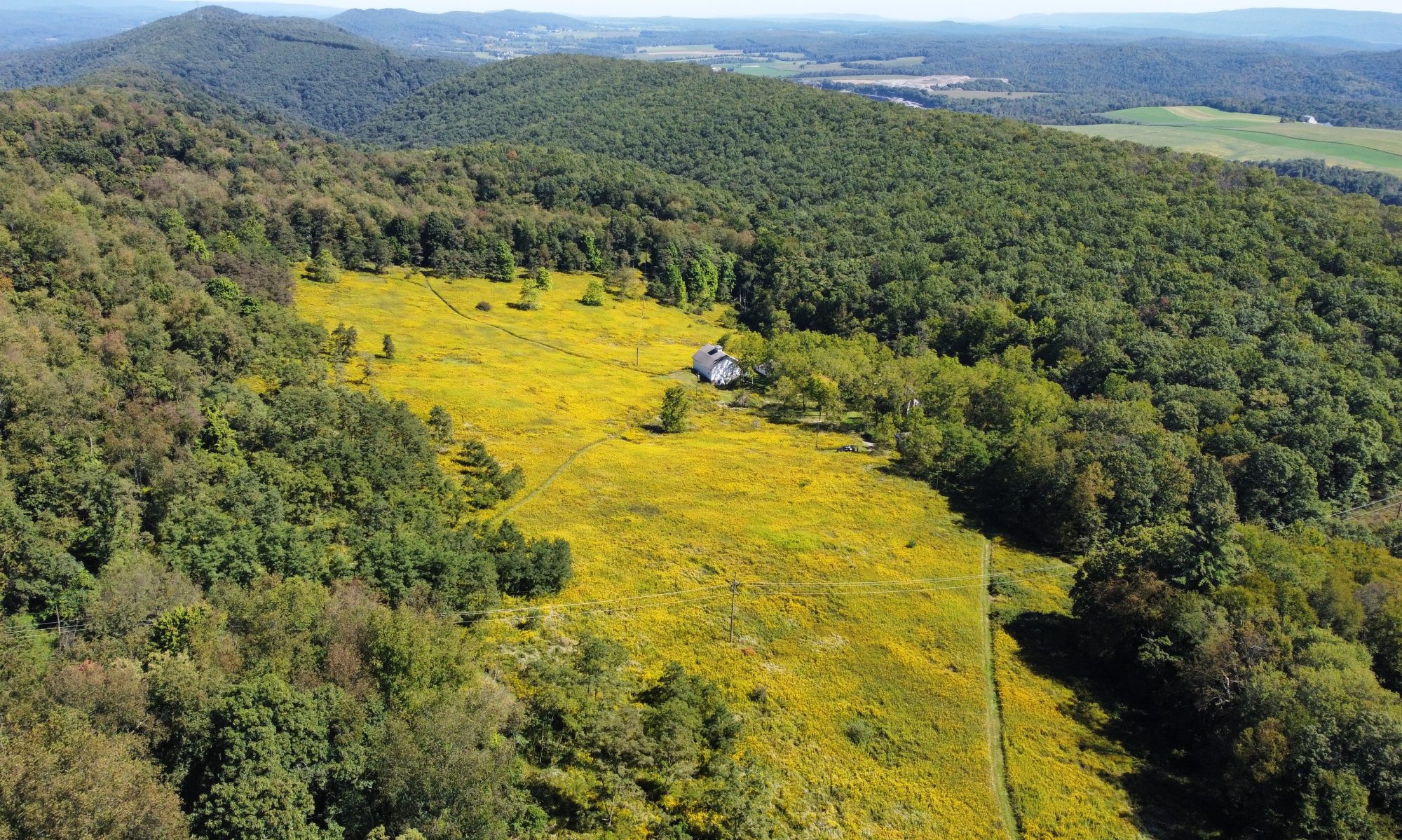
Toward a New Conservation Paradigm

Conservation Planning in a Climate Emergency

a red admiral, placed here to suggest something nebulous about the butterfly effect or whatever

My dad and I were always a bit suspicious of the managerial mindset, which often seems to militate against the kind of humility we thought essential to true ecological understanding. Back when he and Mom got their forest stewardship training in the early 1990s, the main focus was on landowner goals and desires, to which Dad would always respond, wouldn’t it be more interesting to find out what the land wants?

Pennsylvania’s forest stewardship program had been designed by foresters who were convinced that we could have our cake and eat it too, in line with the neoliberal economic thinking then so dominant, which had spawned the oxymoronic paradigm of sustainable growth. Private forest landowners could harvest timber while improving habitat for wildlife, using money from timber sales to pay for various supposed habitat improvements. Suzanne Simard and others were just beginning to discover the ‘wood-wide web’ of micorrhizal fungi, which would eventually reveal just how little even the most well-intentioned foresters had ever understood about the basic hows and whys of forest composition.

We were easy converts for the then-new rewilding movement, adopting a laissez-faire approach to forest stewardship. So much of what then passed for good stewardship involved timbering, and having recently fought loggers to a standstill on the neighboring property in the hollow, and then purchased that property after it was destroyed by logging, Dad was in no mood for more cutting, no matter how worthy the intention. Instead, he talked about managing by not managing. Good luck managing wildlife, he’d say. I manage hunters.

amateur photography has taught me that everything is more interesting in context

Over the ensuing decades it has become so obvious that the least disturbance can create an opening for invasive species, I don’t think many forestry experts would now dispute the ecological perils of logging. Even landowners who don’t care about salamanders or warbler habitat don’t want to see their land so overrun with barberry or autumn olive that they can’t get through it even to hunt. So I think we’ve been vindicated in our opposition to timbering, but not in our preference for passive management, which now seems terribly naive.

The spread of invasive species and devastating new pests and diseases have made it clear that while rewilding can remain a central goal, it’s going to require active management… and we need to step up our invasive control efforts or there won’t be much native habitat left, at which point rewilding becomes meaningless. A feral dog is not the same as a wolf.

But making any sort of detailed plan when the future is so uncertain remains challenging. It seems to require thinking in terms of multiple alternative scenarios: for example, the regional climate is expected to get wetter as well as warmer, but we’d be nuts to not also anticipate forest fires. Thinking about what trees and shrubs to plant or otherwise recover must take into account all their new pests and diseases as best we can, but the ecology is changing so quickly, it’s often impossible to know whether planting a lot of a given species is essential to preserving it, or a fool’s errand that diverts resources from other species that are more likely to hang on. You see the difficulty?

The Healing Mountain

a random sassafras tree on Sapsucker Ridge

Last night, I was discouraged to learn about a new blight affecting sassafras, one of my favorite trees—and not only because I love the taste and drink sassafras tea every day. They’re beautiful looking trees with reddish bark and gnome-like growing habits, they can produce large crops of soft mast of the sort preferring by migrating songbirds, and they often develop hollows for cavity-nesters. I had already made a mental note to myself to include sassafras as a target species for our conservation efforts, along with things like sugar maple, shagbark hickory, American plum, persimmon, and white oak: edible and medicinal species whose presence on the mountain should help preserve the forest, by making it more valuable standing than cut.

I suppose this falls under the heading of seventh-generation thinking. Yes, I know the land is protected by a conservation easement with the Western Pennsylvania Conservancy, but I’m also considering scenarios involving partial or total societal collapse, in which the legal system no longer really functions. These scenarios seem in some ways more likely than blithely assuming that the present system will somehow continue to lurch along.

So the ‘food forest’ paradigm seemed like a good, if partial, fit for us. Local folks already value forests as a source of venison, so there is a cultural predisposition toward a hunter-gatherer mindset. But now I’m thinking it might be better to go with an adjacent concept: instead of a food forest, how about a healing mountain? I like this because it points toward an important truth: as the land heals from its own abuse, it becomes more and more effective as a healing refuge for plants and animals, including humans.

In our language for the conservation easement, we talked about wanting to manage for future old growth in part to preserve local air and water quality, but also for more nebulous aesthetic and spiritual reasons. We want it to be a source of regular regeneration and inspiration for people who live around here. The health benefits of walking are well documented, especially walking in forests, where terpenes released by trees help bolster immune systems. And since it seems that the American healthcare system is going to continue to suck in any likely future, we surely can’t go wrong by emphasizing the medicinal and nutritional properties of native trees, shrubs, vines, fungi and wildflowers.

Of course, every conceptual framework has its drawbacks: foregrounding some things tends to obscure other things. It’s true that I am in much better shape now as a result of regular hikes on the mountain than I was pre-Covid, when I was more sedentary… BUT it’s also important to acknowledge that at this point the mountain might be as dangerous as it is healing, given the increasing prevalence of tick-borne and mosquito-borne diseases such as Lyme and West Nile Virus.

But it does also seem possible that over the next century, if the mountain is actively encouraged to heal from the past 2+ centuries of exploitation, it should become considerably less accommodating to ticks, at least. Possibly there are also native mosquitoes that might be able to out-compete the aggressive invaders carrying the bulk of the new diseases, if given optimal conditions? I live in hope!

Regardless, in general, with biodiversity comes resilience. And as the mountain heals, it should harbor more of the more sought-after medicinal plants, including such things as goldenseal and ginseng. At which point we have to hope whoever owns the land will find a way to prevent a new cycle of exploitation. All the more reason, I suggest, to promulgate this new paradigm of healing mountains. For our new caretaker Eric Oliver, that has become his literal life’s work, learning how to recover native forests on strip-minded mountains, currently as the Pennsylvania coordinator for Green Forests Work. Until very recently, this is something the experts said couldn’t be done.
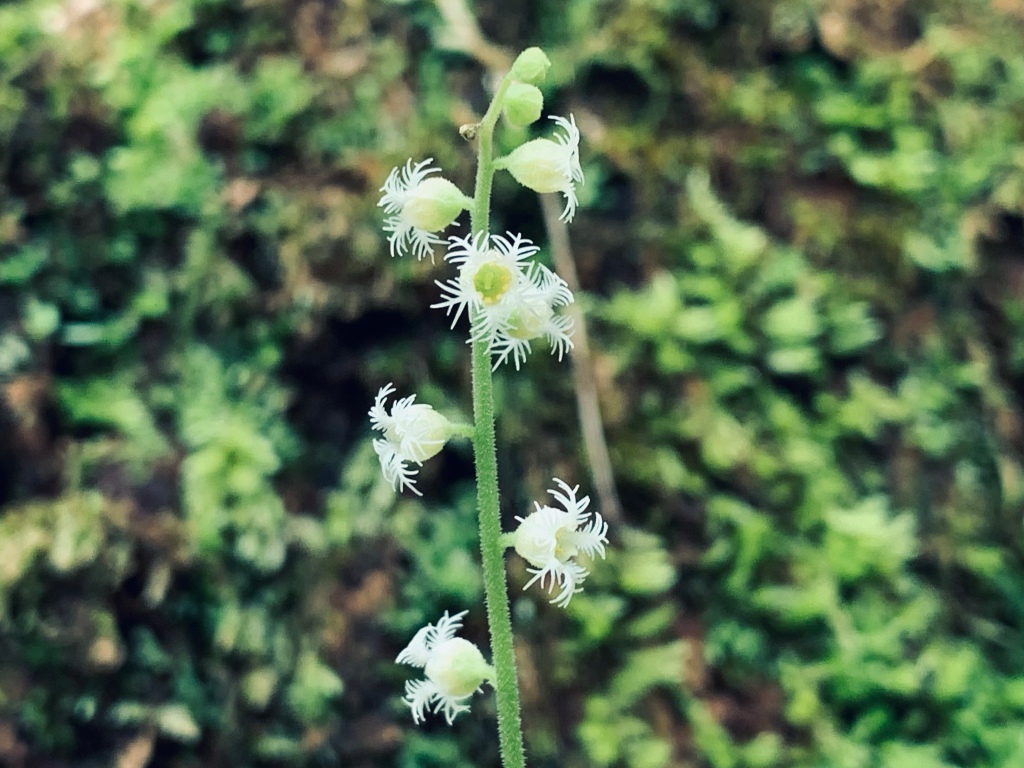
this mitrewort was my reward for walking round a big tulip tree to pull a privet sprout today

During the pandemic, “nature is healing” became an eyeroll-inducing meme, fueled by videos of flocks of goats taking over villages and such, suggesting that all nature really needs is for humans to leave it the hell alone for a while. And that’s a pretty solid instinct. But the success of Eric’s efforts points to a significant continuing role for humans in the natural world. We can each become a healer of sorts, not just walking but noticing, listening, learning, documenting, responding creatively, responding empathetically, learning how and what to weed, to propagate, to nourish or protect. The mountain needs us—at least for now—almost as much as we need the mountain.

John Davis visits Plummer’s Hollow as part of TrekEast

John Davis' campsite in Plummer's Hollow

UPDATE (6/22): Listen to Emily Reddy’s interview with John in Plummer’s Hollow for a news story on our local NPR station, WPSU.

We’ve been honored to host John Davis from the Wildlands Network for two nights in Plummer’s Hollow as part of his epic, 6,000-mile journey to raise awareness of wildlands connectivity — “no protection without connection” — in the Eastern U.S. and Canada. He started in Key Largo in February and hopes to make it to the Gaspe Peninsula by October, traveling by boat, hiking, and biking, visiting as many wildlands in the East as possible. You can follow along via the TrekEast blog on the Wildlands Network website, and/or follow @TrekEast on Twitter for more up-to-the-minute photos and brief audio blogposts.

John pitched camp in the woods up beyond the garage, and uploaded three different audio posts last night and this morning, before getting underway around 7:00. Here are those three posts in the order he uploaded them: Energy Assault (3:04); Woodrat (2:48); Nature and Energy (3:21).

John Davis photographing downy rattlesnake plantain in our 3-acre deer exclosure
John photographing downy rattlesnake plantain in our 3-acre deer exclosure

John was one of the founders of Wild Earth magazine and the Wildlands Project, as it was then called, which together played a pivotal role in shaping our own thinking as eco-centric forest stewards, helping us see how our property fit into the larger conservation picture, and making us strong advocates for ecosystem recovery and large carnivore restoration, among other things. So we were pleased to be able to meet John and show him around the property, and compare notes about the environmental movement over the past 25 years. Also, as a long-time blogger and multimedia guy, I must say I’m very impressed by the electronic communications system John and his support staff have set up. He’s an excellent extemporaneous speaker, as the audio posts demonstrate, and also a gifted listener, so if you get a chance to go see him as TrekEast continues, don’t miss it. (His next appearance is this very evening in State College — see the Centre Daily Times for details.)

John Davis - heading out
John heading out on the next part of his TrekEast journey this morning before it got too hot

Walking the point count

We are counting birds for science, my mother and I. Plummer’s Hollow is part of the Bald Eagle Ridge Important Bird Area (IBA 32). We walk without words through the dawn forest — screech owl, worm-eating warbler — as the sky changes guard, our stops carefully measured: one minute to wait for our arrival to quit sending out ripples, then three minutes of counting every song and call and scanning holes in the canopy for wings: American kestrel, red-tailed hawk, chimney swift.

My job is to jot down the names as Mom whispers them: Hooded warbler. Scarlet tanager. Acadian flycatcher. Two red-eyed vireos. I watch the second hand come around, call time, and we walk the 500 feet to the next spot, taking three and a half hours to circle our mountaintop farm, ridgetop to ridgetop, half-way down the hollow and back. There are 16 points in all, the last on my parent’s front porch. Brown thrasher, ruby-throated hummingbird.

As I walk, I jot down notes for another list, one I know I won’t have the heart to finish: 25 things that make me sad. The oil spill in the Gulf, climate change, mountain-top removal, white nose syndrome, poverty and over-consumption… The way the land looked just 30 years ago, when I was a kid. How many more invasive species there are now. Our shrinking population of wood thrushes, the loss of that incomparable music, which this morning’s numbers should help document.

If we can’t learn to save, at least we can begin a more accurate accounting. Blue-gray gnatcatcher, red-bellied woodpecker, cardinal, common crow. This is our fifth year walking the point count. We hope to continue for decades, and find others to keep it going after we’re gone.

Horizontal gas drilling: perfectly safe as long as it isn’t in a watershed

An an update to our May 19 post on gas leasing for the deep Marcellus Shale play, the award-winning environmental reporter for the Pittsburgh Post-Gazette, Don Hopey, has a new piece on the lease sale state-wide that goes into detail about the possible effects of this kind of gas drilling on water quality:

The environmental concerns are primarily related to water use. Conventional vertical wells can take as much as 1 million gallons and horizontal drilling operations can use 3 million gallons or more.

Although most areas of the state where the drilling has taken place so far have plenty of water, problems have occurred. Range Resources-Appalachia and Chief Oil and Gas were cited and fined by the DEP in May for violating the state Clean Streams Law by removing too much water from small streams near their deep wells in Lycoming County. Both firms are now in compliance and have filed required water management plans.

Where the water goes after it’s used may be more of a problem. Water used to fracture underground rock and pulled back to the surface can be contaminated with brine and salt, and even pick up some radioactivity, and must be treated before it can be released into state waterways.

There are only two water treatment facilities in the state that specialize in such water treatment, but drilling companies can contract with municipal water treatment facilities if they have the capacity and capability to do such treatment.

We’ve received some interesting correspondence as a result of our last post on this issue. Someone with a Texas-based email provider assured us that the energy companies were honorable, and that we’d be passing up the opportunity of a lifetime if we didn’t sign. And a local gentleman from Decker Hollow was kind enough to inquire whether we’d be interested in joining other local landowners to engage in collective bargaining with the landsmen. When we drew his attention to a then-recent article in the Centre Daily Times (no longer available on the free web), in which a landowner who had signed away his subsurface rights to a gas company talked about the damage done and warned that doing so was tantamount to selling one’s soul, our correspondent replied: “My soul belongs to Jesus Christ. My mineral rights are for sale to the highest bidder.”

If you would like to witness to your faith in regards to the greed-driven destruction of Creation, please feel free to use the comment box below.

Gas lease proposal: “You may already be a sucker!”

gas lease proposal 1

gas lease proposal 2

gas lease proposal 3

Alert readers will have already discovered several amusing things about this missive, which arrived unsolicited in this morning’s mail:

  • Though purporting to be a lease proposal for Blair County in the subject line and first paragraph, it references the neighboring Cambria County in the “terms and conditions.” One might take this for a simple copy-and-paste error, except that the reference is specifically to the “initial bonus consideration” of $500.00 per acre. I’m not a lawyer, but it doesn’t take a whole lot of imagination to picture them saying, after one had already signed such a proposal in great anticipation of instant wealth (it would amount to over $300,000 for us), “Sorry, your land isn’t in Cambria County, so we don’t owe you anything!”
  • “The royalty rate in the lease will be 1/8.” Uh, 1/8 of what, exactly? More weasel words designed to trap the unwary — or just extremely vague/sloppy language from people who do this for a living?
  • It hardly takes any more time and ink to type “Carrizo” than CRZO, but the stock-ticker symbol is used throughout. Is this an attempt to garner respectability, to intimidate, or both?
  • “CRZO’s activity in the area” could be harmed by the disclosure of the terms. Gee, I can’t imagine how!
  • If not signed and returned by May 12, “the offer shall immediately become null and void.” OH NO, PAPPY, WE’RE SCREWED! QUICK, CALL ‘EM UP AND BEG FOR AN EXTENSION!
  • Despite being dated May 5, the letter is actually postmarked 16 May 2008.
  • The stamp cancelation text quotes John Adams: “Let us dare to read, think, speak, and write.” Yes, let’s.

The Google Finance page for Carrizo (linked above) makes note of their “acreage in shale plays in … the Marcellus in Pennsylvania/New York.” That is what’s at issue here: a deep deposit of natural gas that may be accessable from various parts of the Ridge-and-Valley geologic province, not just the Allegheny Plateau to our west and north where the shallower gas plays occur. As the New York Times put it last month:

A layer of rock here [in Pennsylvania] called the Marcellus Shale has been known for more than a century to contain gas, but it was generally not seen as economical to extract. Now, improved recovery technology, sharply higher natural gas prices and strong drilling results in a similar shale formation in north Texas are changing the calculus. A result is that a part of the country where energy supplies were long thought to be largely tapped out is suddenly ripe for gas prospecting. […]

Natural gas in the Marcellus and other shale formations is sometimes found as deep as 9,000 feet below the ground, a geological and engineering challenge not to be underestimated. The shales are sedimentary rock deposits formed from the mud of shallow seas several hundred million years ago. Gas can be found trapped within shale deposits, although it is too early to know exactly how much gas will be retrievable.

The Times article refers to the rush to sign leases as a feeding frenzy, and from what we hear, that’s not too far off the mark. Reportedly, some folks in Sinking Valley have already signed leases offering as little as $5.00 per acre! Other offers have gone as high as $600 per acre.

It probably goes without saying that we will never sign away any subsurface rights here on our property. In addition to very real concerns about groundwater contamination (Marcellus shale contains uranium), the main problem with gas drilling is habitat fragmentation. The Pennsylvania Department of Conservation and Natural Resources recently caved to pressure and opened up 75,000 acres of state forest land to gas drilling, reversing an earlier ban. Their claim is that the greater spacing between wells will lead to less forest fragmentation than would be the case with ordinary, shallow-well drilling, but environmentalists such as the Allegheny Defense Project’s Ryan Talbott, quoted in the linked article, respond that since the pads will be much larger, the difference is neglible. And it’s hard to see how more widely spaced clearings would reduce the number of roads and pipeline right-of-ways very much. Such linear corridors are the worst for spreading invasive plant species and giving access to nest predators on interior forest-dwelling birds, not to mention all-terrain vehicles (maybe that’s what the DCNR spokesflack meant by “other forest uses”).

Many interior forest species are already in steep decline, and it simply isn’t worth endangering them for what might be, at most, the equivalent of two years of total U.S. consumption if every recoverable cubic foot were exploited. We’re appalled that the official stewards of our state wildlands would consider trashing them to feed America’s fossil fuel addiction.

Well, people with dollar signs in their eyes are rarely given to honest discourse, be they state officials or “independent petroleum landmen.” But one thing is certain: geology-speak is really, really cool.

Bedding in the Marcellus is moderately well developed and fissile. Its upper reaches are marked by anoxic dark shales which indicate the Kačák Event, a late Eifelian stage marine anoxic event also associated with an extinction event. […]

The black and gray shales of the Hamilton Group mark the first terrigenous sediments deposited by the erosion of the Acadian Mountains. These sediments were deposited in the Acadian foredeep basin early in the Acadian orogeny, as part of a deep water sequence that continued to form the overlying Brallier Formation and Harrell Formation. The Marcellus Shale was formed from the very first sediments deposited in this very deep, sediment starved, anoxic trough. The dark shale is composed of flysch, a fine mud deposited in the deep water, burying the underlying Onondoga limestone beds.

It would be nice if the Kačák Event were the last extinction to be associated with these deposits.

–Dave

Two Plummer’s Hollow breeding birds included in Watchlist 2007

Watchlist 2007, a listing of U.S. bird species considered at greatest need of immediate conservation attention, “builds on the species assessments conducted for many years by Partners in Flight (PIF) on landbirds, using those same PIF standards, but expanded to cover species of all taxa. The list is based on the latest available research and assessments from the bird conservation community, along with data from the Christmas Bird Count and Breeding Bird Survey.” The list contains 217 species in all, and is divided into “red” and “yellow” — kind of like a two-tiered version of the Department of Homeland Security’s terrorism alert levels. Two species in the less severely threatened “yellow” category regularly breed in Plummer’s Hollow in sizable numbers, according to data we have gathered for the Pennsylvania Breeding Bird Atlas and in annual point counts for the Bald Eagle Ridge Important Bird Area, which includes this property: the cerulean warbler and the wood thrush. These are two of six Watchlist species found in Pennsylvania, according to an article in the PA Environment Digest.

Wood Thrush: Wood thrushes rely on large interior forests and are threatened by habitat fragmentation, deforestation, and nest parasitism. Each year wood thrushes, down 62 percent in Pennsylvania over the past 40 years, migrate from Central America to the U.S., where Pennsylvania houses 8.5 percent of the world’s breeding population. Audubon Pennsylvania is actively engaging landowners and helping them improve their deer management practices as well as advocating statewide improvement to deer management. A deer herd out of balance with Penn’s Woods hinders healthy forest regeneration and serves as a contributing factor to habitat loss for forest-dwelling species, like the wood thrush, and other wildlife.

Cerulean Warbler: The cerulean warbler is found in the forests of riparian valleys and ridge top habitats in the eastern United States. Over the past half century it has steadily declined in numbers primarily due habitat loss directly associated with numerous types of human activities on both breeding and wintering grounds. In more recent years large areas of both types of breeding habitat have been destroyed through a practice of coal extraction known as mountaintop removal mining. Audubon Pennsylvania supports alternate placement of wind power turbines, many of which are currently sited along ridge tops. Such placement further promotes fragmentation of ridge top habitats utilized by cerulean warblers.

The presence of such interior-forest species, as well as the ridge’s importance as a migratory corridor for raptors (especially golden eagles), were the main reasons for its designation as an Important Bird Area by the Ornithological Technical Committee of the Pennsylvania Biological Survey. Wind turbine installations proposed for Bald Eagle Ridge and many other forested ridges in central and western Pennsylvania would further endanger these already declining species. We have of course refused offers from wind companies to build on our own portion of the ridge, but are just paranoid enough to fear that someday we might face the imposition of eminent domain.