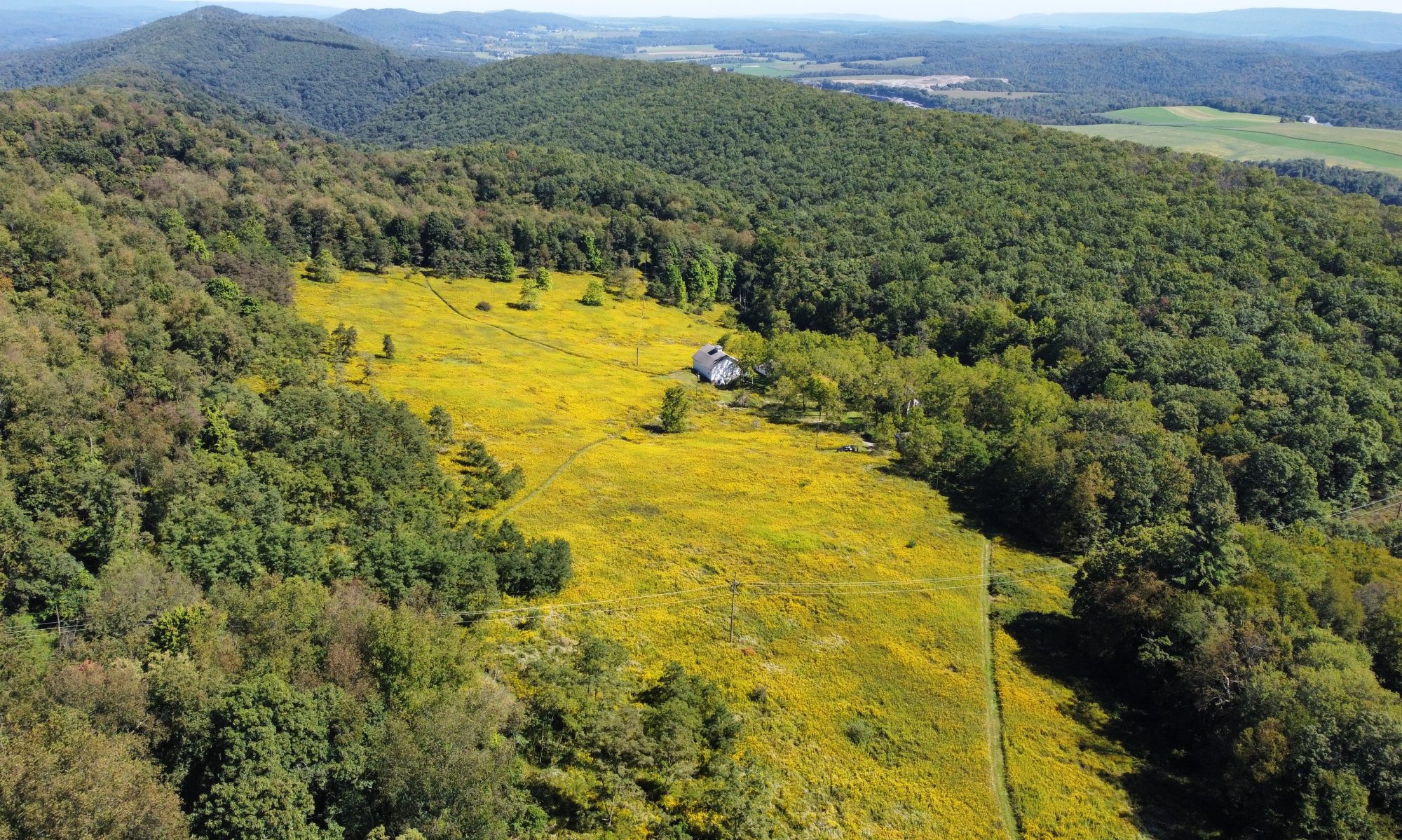
Conservation Planning in a Climate Emergency

My dad and I were always a bit suspicious of the managerial mindset, which often seems to militate against the kind of humility we thought essential to true ecological understanding. Back when he and Mom got their forest stewardship training in the early 1990s, the main focus was on landowner goals and desires, to which Dad would always respond, wouldn’t it be more interesting to find out what the land wants?
Pennsylvania’s forest stewardship program had been designed by foresters who were convinced that we could have our cake and eat it too, in line with the neoliberal economic thinking then so dominant, which had spawned the oxymoronic paradigm of sustainable growth. Private forest landowners could harvest timber while improving habitat for wildlife, using money from timber sales to pay for various supposed habitat improvements. Suzanne Simard and others were just beginning to discover the ‘wood-wide web’ of micorrhizal fungi, which would eventually reveal just how little even the most well-intentioned foresters had ever understood about the basic hows and whys of forest composition.
We were easy converts for the then-new rewilding movement, adopting a laissez-faire approach to forest stewardship. So much of what then passed for good stewardship involved timbering, and having recently fought loggers to a standstill on the neighboring property in the hollow, and then purchased that property after it was destroyed by logging, Dad was in no mood for more cutting, no matter how worthy the intention. Instead, he talked about managing by not managing. Good luck managing wildlife, he’d say. I manage hunters.

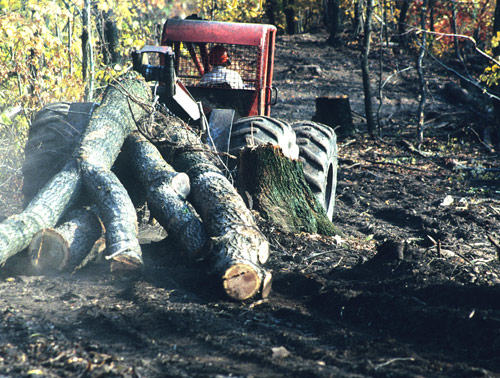
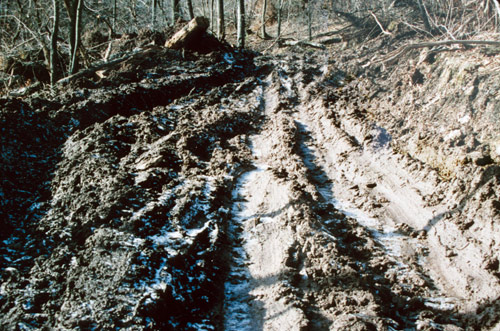
Over the ensuing decades it has become so obvious that the least disturbance can create an opening for invasive species, I don’t think many forestry experts would now dispute the ecological perils of logging. Even landowners who don’t care about salamanders or warbler habitat don’t want to see their land so overrun with barberry or autumn olive that they can’t get through it even to hunt. So I think we’ve been vindicated in our opposition to timbering, but not in our preference for passive management, which now seems terribly naive.
The spread of invasive species and devastating new pests and diseases have made it clear that while rewilding can remain a central goal, it’s going to require active management… and we need to step up our invasive control efforts or there won’t be much native habitat left, at which point rewilding becomes meaningless. A feral dog is not the same as a wolf.
But making any sort of detailed plan when the future is so uncertain remains challenging. It seems to require thinking in terms of multiple alternative scenarios: for example, the regional climate is expected to get wetter as well as warmer, but we’d be nuts to not also anticipate forest fires. Thinking about what trees and shrubs to plant or otherwise recover must take into account all their new pests and diseases as best we can, but the ecology is changing so quickly, it’s often impossible to know whether planting a lot of a given species is essential to preserving it, or a fool’s errand that diverts resources from other species that are more likely to hang on. You see the difficulty?
The Healing Mountain

Last night, I was discouraged to learn about a new blight affecting sassafras, one of my favorite trees—and not only because I love the taste and drink sassafras tea every day. They’re beautiful looking trees with reddish bark and gnome-like growing habits, they can produce large crops of soft mast of the sort preferring by migrating songbirds, and they often develop hollows for cavity-nesters. I had already made a mental note to myself to include sassafras as a target species for our conservation efforts, along with things like sugar maple, shagbark hickory, American plum, persimmon, and white oak: edible and medicinal species whose presence on the mountain should help preserve the forest, by making it more valuable standing than cut.
I suppose this falls under the heading of seventh-generation thinking. Yes, I know the land is protected by a conservation easement with the Western Pennsylvania Conservancy, but I’m also considering scenarios involving partial or total societal collapse, in which the legal system no longer really functions. These scenarios seem in some ways more likely than blithely assuming that the present system will somehow continue to lurch along.
So the ‘food forest’ paradigm seemed like a good, if partial, fit for us. Local folks already value forests as a source of venison, so there is a cultural predisposition toward a hunter-gatherer mindset. But now I’m thinking it might be better to go with an adjacent concept: instead of a food forest, how about a healing mountain? I like this because it points toward an important truth: as the land heals from its own abuse, it becomes more and more effective as a healing refuge for plants and animals, including humans.
In our language for the conservation easement, we talked about wanting to manage for future old growth in part to preserve local air and water quality, but also for more nebulous aesthetic and spiritual reasons. We want it to be a source of regular regeneration and inspiration for people who live around here. The health benefits of walking are well documented, especially walking in forests, where terpenes released by trees help bolster immune systems. And since it seems that the American healthcare system is going to continue to suck in any likely future, we surely can’t go wrong by emphasizing the medicinal and nutritional properties of native trees, shrubs, vines, fungi and wildflowers.
Of course, every conceptual framework has its drawbacks: foregrounding some things tends to obscure other things. It’s true that I am in much better shape now as a result of regular hikes on the mountain than I was pre-Covid, when I was more sedentary… BUT it’s also important to acknowledge that at this point the mountain might be as dangerous as it is healing, given the increasing prevalence of tick-borne and mosquito-borne diseases such as Lyme and West Nile Virus.
But it does also seem possible that over the next century, if the mountain is actively encouraged to heal from the past 2+ centuries of exploitation, it should become considerably less accommodating to ticks, at least. Possibly there are also native mosquitoes that might be able to out-compete the aggressive invaders carrying the bulk of the new diseases, if given optimal conditions? I live in hope!
Regardless, in general, with biodiversity comes resilience. And as the mountain heals, it should harbor more of the more sought-after medicinal plants, including such things as goldenseal and ginseng. At which point we have to hope whoever owns the land will find a way to prevent a new cycle of exploitation. All the more reason, I suggest, to promulgate this new paradigm of healing mountains. For our new caretaker Eric Oliver, that has become his literal life’s work, learning how to recover native forests on strip-minded mountains, currently as the Pennsylvania coordinator for Green Forests Work. Until very recently, this is something the experts said couldn’t be done.
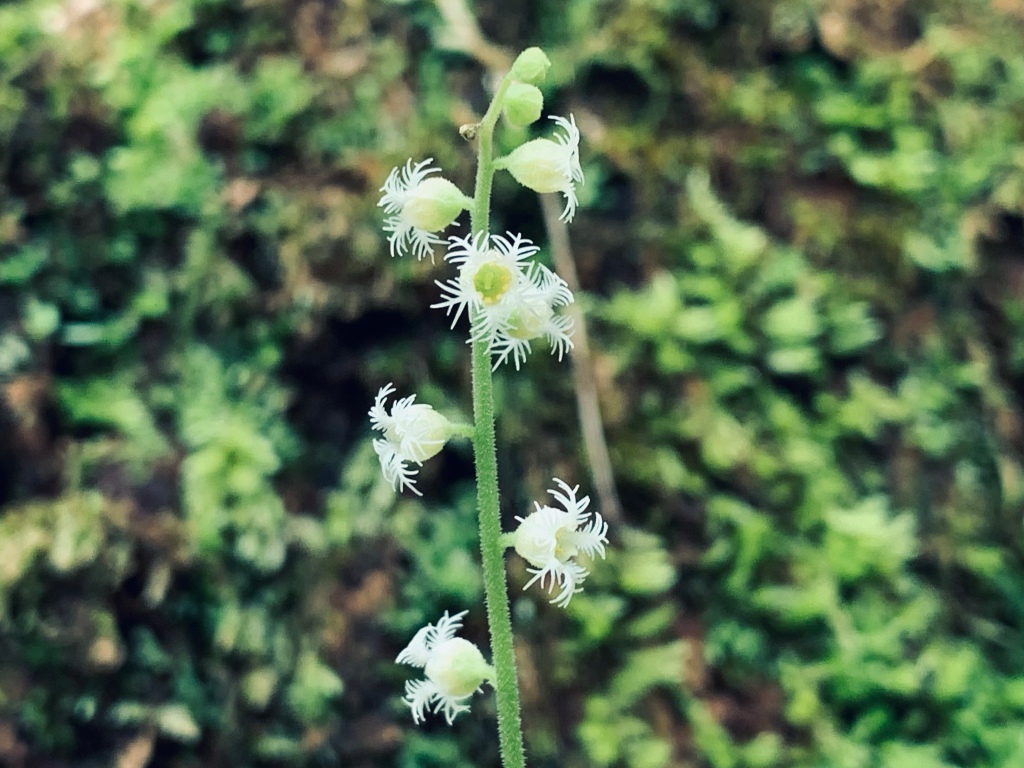
During the pandemic, “nature is healing” became an eyeroll-inducing meme, fueled by videos of flocks of goats taking over villages and such, suggesting that all nature really needs is for humans to leave it the hell alone for a while. And that’s a pretty solid instinct. But the success of Eric’s efforts points to a significant continuing role for humans in the natural world. We can each become a healer of sorts, not just walking but noticing, listening, learning, documenting, responding creatively, responding empathetically, learning how and what to weed, to propagate, to nourish or protect. The mountain needs us—at least for now—almost as much as we need the mountain.
 Plummer's Hollow, Pennsylvania