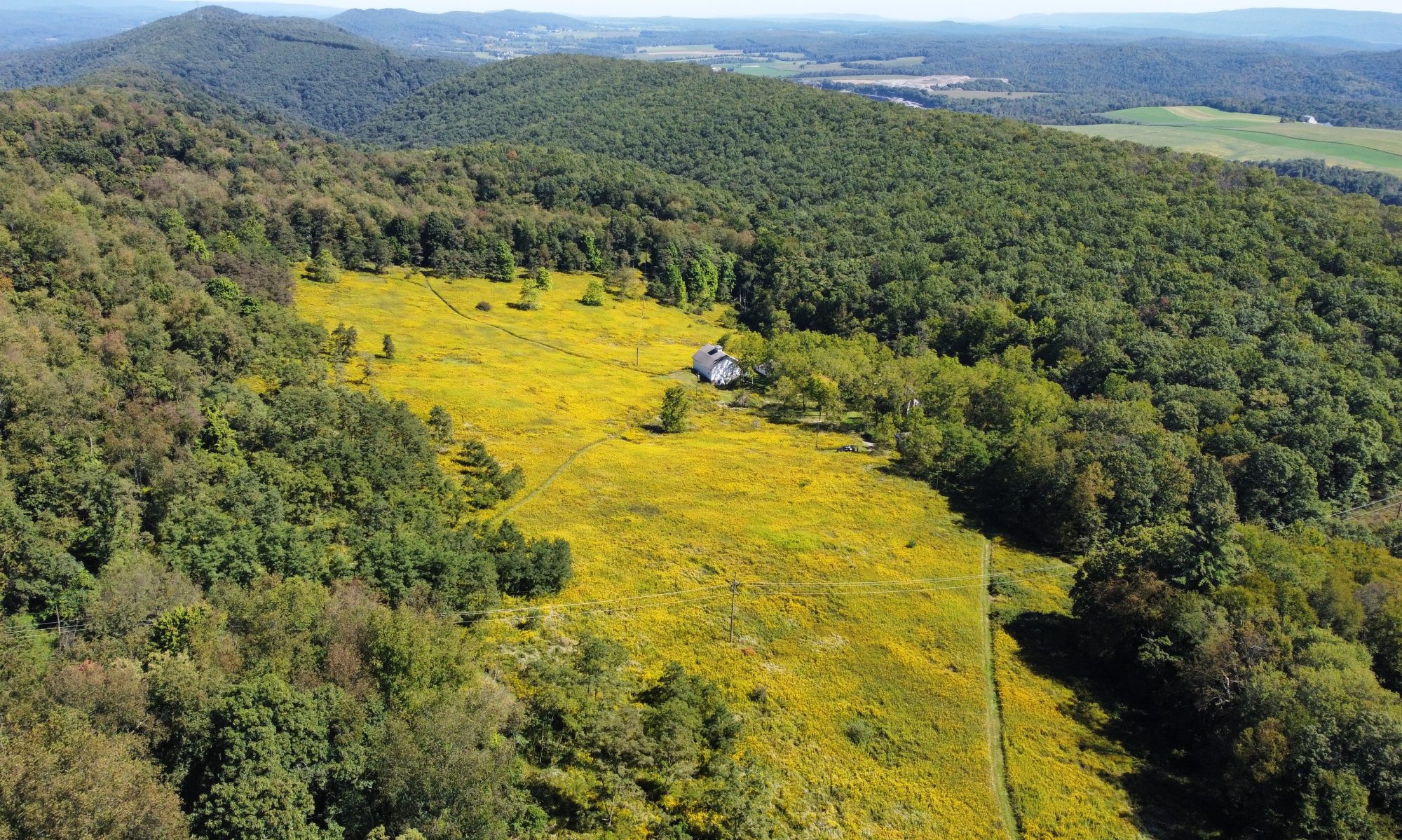
This is a quick-and-dirty attempt to assess changes in biodiversity in Plummer’s Hollow during Bonta family tenancy. We are not experts, especially where things like microscopic taxa and non-vascular plants are concerned, and it’s more than likely we’ve missed some things.
Mammals new to Plummer’s Hollow since 1970s
- fox squirrel
- eastern coyote (new species in PA since 1950s; first seen here in early 90s)
- fisher (once extirpated from state, now firmly established and spreading rapidly)
Mammals much more abundant since 1970s
- black bear (breeding on mountain since late 80s or early 90s)
- porcupine
- bobcat (best sightings from 2006 on)
Mammals less abundant since 1970s
- red fox (prob. displaced by coyotes)
- red squirrel (common around house in early 70s, very infrequent vistor thereafter)
Breeding birds new to Plummer’s Hollow since 1970s
- winter wren (first began breeding in 1993, the summer after an early, wet snowstorm felled over 100 trees across Plummer’s Hollow Run)
- Carolina wren (northward expansion of its range probably facilitated by global warming)
- red-bellied woodpecker (first appeared after the gypsy moth invasion in the early 90s killed lots of oaks)
- cerulean warbler (breeding since at least mid-80s)
- golden-crowned kinglet (nesting in planted Norway spruce grove beginning in 2002)
- black-throated blue warbler (breeding since late 90s)
- common raven (resident since 1980)
- black-throated green warbler (confirmed as breeder in 1993)
- Acadian flycatcher (first confirmed breeding in 1995)
- wood duck (breeding on the mountain in 2005 and 06)
- black vulture (occasional visitor beginning around 2004; prob. breeding in adjacent Sinking Valley)
- barred owl (year-round resident since 2007)
Breeding birds either new, or at least much more abundant since 1970s (uncertainty due to our poorer attention to such things in the early years)
- solitary (blue-headed) vireo
- Kentucky warbler (confirmed as breeders in 1993)
Breeding birds more abundant since 1970s
- worm-eating warbler
- wild turkey
Breeding birds less abundant since 1970s
- wood thrush (still common, but maybe only half as abundant)
- great-horned owl (ditto — West Nile virus victim?)
Reptiles and amphibians
- steep decline in wood frog numbers since mid-90s
- more garter snakes
- possibly fewer wood turtles (but they were never common)
- box turtle population possibly holding steady (we regularly find juveniles)
Invasive plants new since early 1970s
- ailanthus (tree-of-heaven)
- privet
- barberry, both European and Japanese species
- stiltgrass
- hayscented fern (first large patch in late 70s)
- multiflora rose (first sighted in late 70s?)
Native plants extirpated since 1970s
- butternut (originally, there were five individuals scattered across the property. American butternut is globally endangered, being wiped out by a blight throughout its range)
- skunk cabbage (due to logging in 100-acre Helsel tract — the only area where it occurred — 1991)
- American ginseng (? — based on report of one individual who claimed to have collected it here in 1970s. We never saw any ourselves)
Native plants newly established since 1970s
- wood betony
- spring beauties
- nodding ladies’ tresses
Native plants more abundant since 1970s
- purple trillium
- yellow Mandarin
- Solomon’s-seal
- pinesap
- rhododendron
- pink lady’s-slipper
- Canada mayflower
- mayapple
- cutleaf grape fern
- rattlesnake fern
- red elderberry
- wild hydrangea
- maple-leafed viburnum
Native plants suffering declines since 1970s (but some now returning due to recent decline in white-tailed deer population)
- staghorn sumac
- black elderberry
- blackberry
- black raspberry
- red raspberry
- pasture rose
- Joe Pye weed
New invertebrates since 1970s
- gypsy moth caterpillar
- Asian ladybug
- deer tick
- various longhorn beetles (due to dramatic increase in dead trees)
Invertebrates extirpated
- Cicindela rufiventris (a tiger beetle formerly found in bare, sandy areas on powerline, which are now covered with hayscented fern)
- native ladybug species
 Plummer's Hollow, Pennsylvania
Great site Dave, very informative. I have been working for the past 10 year to make our property in Sinking Valley the best in can be.
LikeLike
Hi Craig – Thanks for the comment. It’s good to hear from someone right in the “neighborhood” who feels as strongly about conservation as we do.
LikeLike
Great information and great website. We have a property about an hour north west of you on the border of Clearfield and Jefferson county that we are working to improve the land. A lot of strip mining out that way that makes for poor soil quality. I also like how you note that hunting is important in preserving seedling growth. Keep up the good work!
LikeLike